So what do I mean by comfort viewing?
Well, let’s start by defining comfort food: food that provides a nostalgic or sentimental value, usually associated with childhood or home cooking. And let’s add to that food that is really moreish and easy to eat, such as sour cream and chive Pringles, or Ben and Jerry’s cookie dough ice cream.
And there in a nutshell is Comfort Viewing – films that have nostalgic or sentimental value, either because of their content, their place or because we know them so well they are ‘easy’ films to rewatch – they don’t require much effort from us.
I have a lot of films on DVD that I watch over and over again, and someone suggested that I should make a list and include it as a blog post.
So here is my Top 25, in alphabetic order:
Annie Hall (1977 – Woody Allen)
The romcom that broke all the rules (and the fourth wall). Very, very funny, even though I know all the jokes and can recite them with the film, which must be very annoying for anyone watching with me.
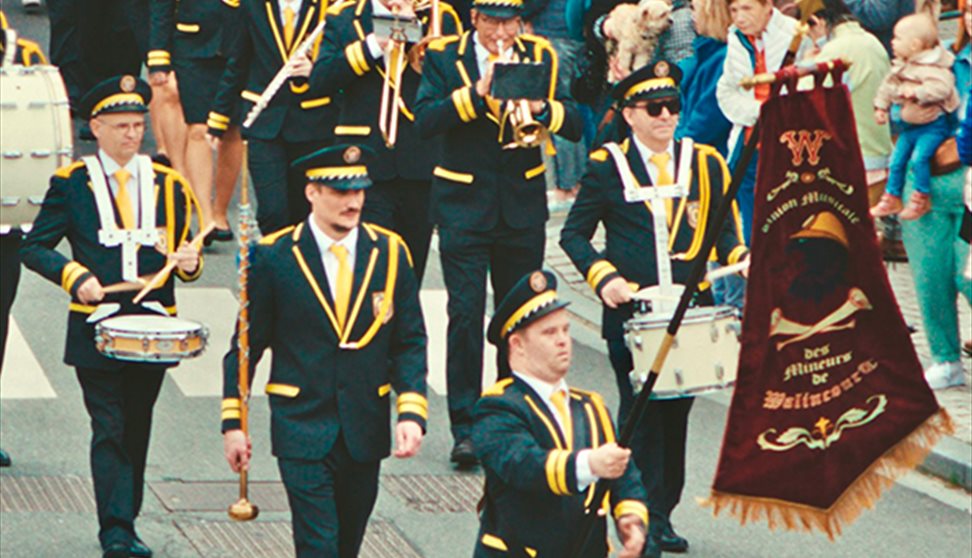
Back to Burgundy (2017 – Cedric Klapisch)
A charming film about three siblings reuniting after their father’s death, to decide how to carve up the family vineyard. I could happily spend a lot more time with these people.
Bergman Island (2021 – Mia Hansen Love)
A romantic drama about two filmmakers visiting the island of Fårö, partly as a pilgrimage to the home of Ingmar Bergman and partly as a working retreat. The film explores the cracks in their relationship but also presents the film she is writing as a separate romance – a film within a film.
Certified Copy (2011 – Abbas Kiarostami)
The film is set in Tuscany, where a successful British writer is shown around the area by a local antiques dealer. But their relationship undergoes a series of odd transformations over the course of a day, leaving one wondering just what is the reality of the situation.
A Chorus of Disapproval (1989 – Michael Winner)
An adaptation of Alan Ayckbourn’s hugely successful 1984 play about small-town corruption and the manipulation of innocence, set around an amateur production of John Gay’s The Beggar’s Opera. The critics didn’t like it, but I love it, perhaps because it shows so much of Scarborough, where I spent so many childhood holidays.
Cinema Paradiso (1988 – Giuseppe Tornatore)
A coming-of-age comedy drama about a successful filmmaker returning to his hometown in Sicily and reliving his childhood friendship with the aging projectionist who worked at the local cinema, from which he developed his lifelong love of film.
Defence of the Realm (1985 – David Drury)
A British cold-war political thriller about a teenager’s death, a state cover-up, and a young newspaper reporter determined to uncover what really happened, and then report it to the World.
Fallen Leaves (2023 – Aki Kaurismäki)
A romantic comedy about two lonely people struggling to get by on low paid work, who meet by chance in a karaoke bar and tentatively begin a relationship. This was my introduction to Kaurismäki’s off-the-wall style and I have since obtained and watched all of his earlier work. It is the most recent film on this list, and I have already watched it three or four times.
The Celebration – Festen (1998 – Thomas Vinterberg)
A Danish black comedy about a family gathering to celebrate their patriarch’s 60th birthday, during which the eldest son reveals a shocking family secret in his congratulatory speech. This was the first film of the Dogme 95 movement.
The Fourth Protocol (1987 – John Mackenzie)
Another British cold-war thriller, this time about nuclear weapons. The title refers to a clause in an agreement between east and west on restricting nuclear proliferation. It pitches Michael Caine against Pierce Brosnan.
Gorky Park (1983 – Michael Apted)
Dennis Potter’s adaptation of the novel by Martin Cruz Smith about the investigation into an incident which occurred in Moscow’s Gorky Park where three murder victims are discovered under strange circumstances.
Hidden – Caché (2005 – Michael Haneke)
A neo-noir psychological thriller about a middle-class French couple who are terrorised by anonymous tapes delivered to their front door, showing they are under surveillance. Clues in the videos suggest they relate to an incident in the husband’s childhood.
In the House (2012 – Francois Ozon)
A French comedy-drama about the relationship between a middle-aged literature teacher and one of his pupils, exploring the process of writing fiction by using real people to create the drama and the moral questions this imposes.
Julieta (2016 – Pedro Almodóvar)
A Spanish melodrama about the relationship between a mother and her estranged teenage daughter, inspired by three short stories by Alice Munro. The film pieces together the emotional history of their relationship, whilst retaining the angst that the estrangement has on Julieta, the mother, who cannot understand what came between them.
Let the Sun Shine In (2017 – Clare Denis)
A French romantic drama about a middle-aged, divorced, Parisian artist who is constantly looking for the right man, but instead has a series of unsatisfying relationships with the wrong ones. Juliette Binoche is excellent.
Melinda and Melinda (2004 – Woody Allen)
Four writers discuss whether life is essentially comic or tragic, then two of them proceed to tell a story, basically the same story, but one from the comic perspective and the other from the tragic.
Moonlight in Paris (2011 – Woody Allen)
The third Woody Allen on my list, a comedy fantasy film about an American writer, holidaying in Paris with his fiancée, who chances across a portal allowing him to travel back in time and meet his literary heroes. The experience leads him to question whether his fiancée is the right woman for him.
Nora (2000 – Pat Murphy)
The story of James Joyce and the love of his life Norah Barnacle from their meeting in Dublin, through their tempestuous relationship as an Irish emigrant couple in Italy. The film explores his writing, his drinking, their tempestuous sex life, their family life and his jealousy. I love all things Joycean, and watch this at least once a year, usually before setting off for Dublin.
Paris, 13th District (2021 – Jacques Audiard)
A French drama film containing several interlocking stories, loosely based on several comic short stories by US cartoonist Adrian Tomine. Each of the stories works in its own right, but weaved together skilfully by this master filmmaker, it is an intoxicating mix.
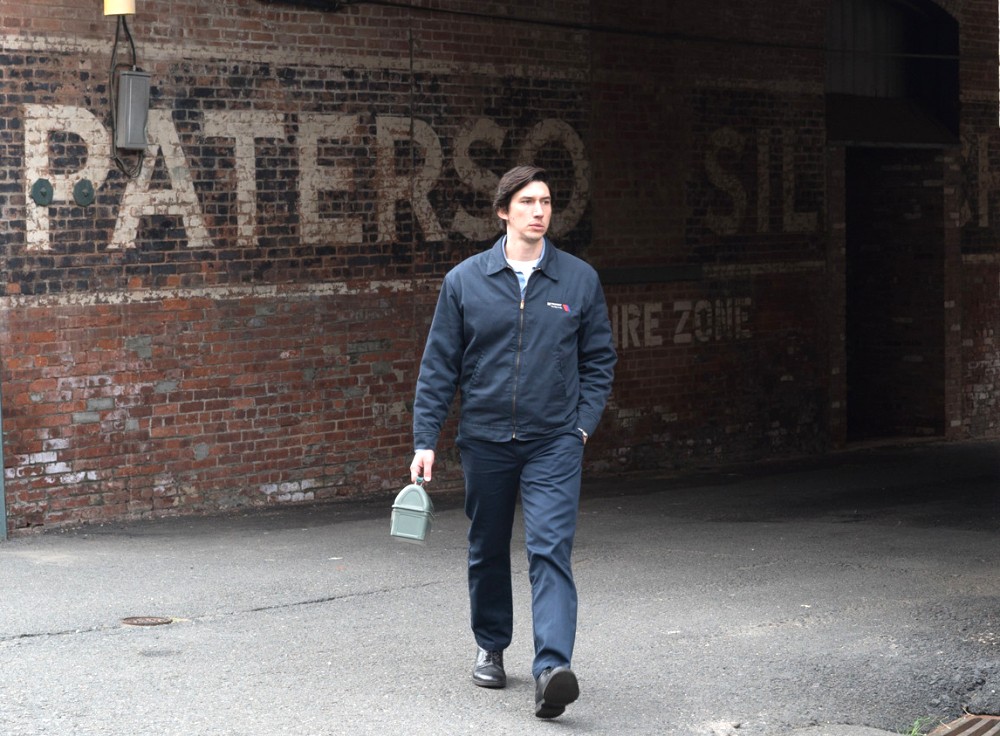
Paterson (2016 – Jim Jarmusch)
Already mentioned in my Blog post on films about poetry, this is the slow-burn story of a week in the life of a bus-driver poet called Paterson who lives in Paterson, New Jersey. We follow his daily life, going to work, coming home to dinner with his wife, walking the dog via a local bar, and all the time thinking and writing poetry. Wonderful film!
Private Fears in Public Places (2007 – Alain Resnais)
The second Ayckbourn adaptation on the list, this a French version of one of his darker plays, about loneliness and isolation. The setting has been moved from a small English town to Paris. Six disparate characters confront their emotional solitude as their lives intertwine.
The Russia House (1990 – Fred Schepisi)
The last of my cold-war thrillers, Tom Stoppard’s masterful adaptation of John le Carré’s spy novel. A British publisher, who is very active in the Soviet Union, becomes enmeshed in the story of a Russian Scientist who wishes to defect to the West. The CIA need his help to close the deal, but he has another, more romantic defection on his mind.
Sex and Lucia (2001 – Julio Medem)
A Spanish erotic drama film about a waitress named Lucia who falls in love with a writer named Lorenzo. However Lorenzo discovers he has a daughter from a casual sexual encounter several years earlier. The story moves backwards and forwards in time as it plays out, with tragic consequences.
Summer with Monika (1952 – Ingmar Bergman)
A Swedish romance film about a young working-class boy named Harry who meets and falls in love with an adventurous young woman named Monika. After a row with her drunken father, she leaves home and goes to Harry for help. They steal a boat and head off into the Stockholm Archipelago, where they spend an idyllic summer together.
Tamara Drew (2010 – Stephen Frears)
A British romantic comedy based on a comic strip and graphic novel by Posy Simmonds. The very lovely Tamara returns to her Dorset home after living in London, and sets the local men competing for her favours.
So there you have it – 25 films which I watch when I feel the need for comfort viewing.
Having prepared the list, I would be quite happy sitting down to watch any one of these films now. However, in preparing the list, I had to look through my DVD collection, and in doing so, found so many films that I also want to watch again, that I don’t have enough time.
Not only that, but I still have seven films to watch before I can finalise my ‘Top 3 and a bit’ films about Poets, so that will take me a few more days.
It is a hard life being retired!







 Richard Online