RICHARD’S BLOG

  • REVIEW: My Mother’s Wedding ★★☆☆☆

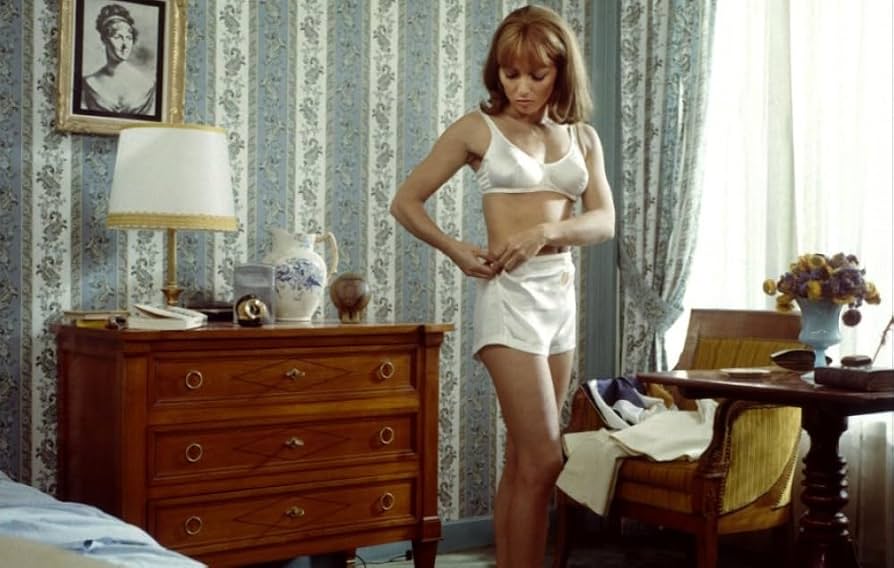
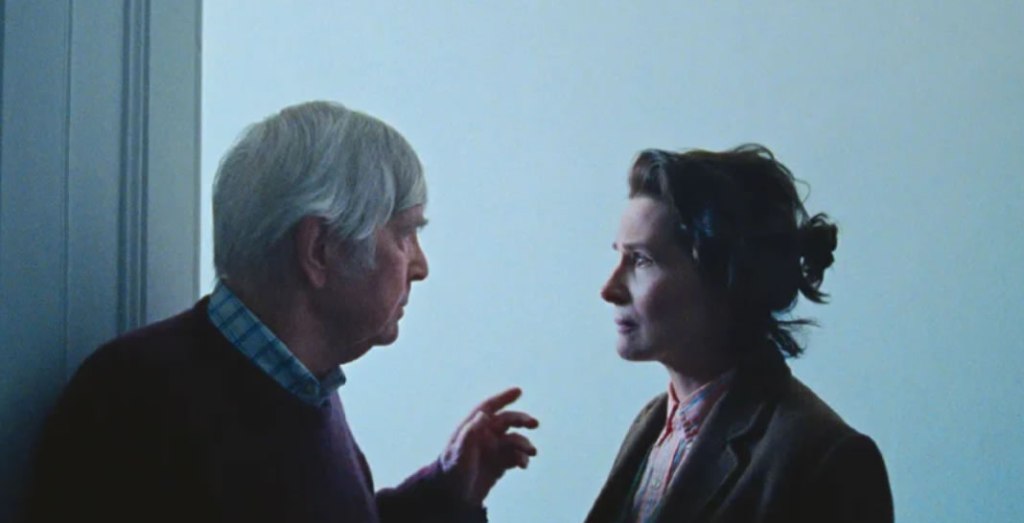
    My Mother’s Wedding is a 2023 English comedy-drama directed by Kristin Scott Thomas (in her feature directorial debut) and co-written by Scott Thomas with her journalist husband John Micklethwait. The film had its world premiere at the Toronto International Film Festival in September 2023 but was not released in the UK until last Friday, 29 May 2026: another film with a lengthy delay between world premiere and general release, this time almost certainly due to difficulties in securing distribution.

    Sisters Katherine (Scarlett Johansson), Victoria (Sienna Miller) and Georgina (Emily Beecham) return to their family home to attend the wedding of their twice-widowed mother Diana (Kristin Scott Thomas), who is marrying Geoff Loveglove (James Fleet). Diana’s first two husbands were both Royal Navy pilots who died in action in their twenties: the first during the Falklands War, and the second in Bosnia.

    There is an awful lot going on here: each of the daughters has her own significant sub-plot, the details of which I will not go into. Suffice to say I thought of everything, everywhere, all at once, and I do not mean the film – just the effect of the complexities of the plot attacking from so many angles.

    It is loosely based, or at least inspired by, major events in Scott Thomas’s own life, and is clearly a very personal film. Perhaps somebody should have advised her that writing, directing and starring in your first feature, especially one so incredibly personal in its storytelling, is not a great idea. There are successful directors who have done everything in their first films, but they are few and far between: most either write or direct their first major feature, not both, and certainly starring in the film is a step too far (even Truffaut drew the line at that).

    On the positive side, the scenery is very nice and the actors playing the three sisters, particularly Miller and Beecham, were excellent. However, the storytelling was baggy and confused and there was simply too much in there to do justice to anything; maybe this should have been the material for her first four films. In addition, the flashbacks were shown in Raymondbriggsesque (I made that word up) drawings which are rather twee and, after a very short time become very irritating. And before I forget, the sex scene is utterly ludicrous!

    In conclusion, My Mother’s Wedding is a bad film. It is well-intentioned and straight from the heart, but ultimately lacking in the necessary creative control and discipline. Having said that, I think Scott Thomas will direct good films – she just needs to take a step back, direct someone else’s script, and stay behind the camera. That does not mean she should stop acting – I have always loved her work – but just not mix the two jobs together until she has found her directorial feet.

  • REVIEW:  Fairyland★★★☆☆

    Fairyland is a 2023 American coming-of-age drama written and directed by Andrew Durham (in his feature directorial debut) and based on Alysia Abbott’s memoir Fairyland: A Memoir of My Father. Sofia Coppola was initially to have co-written the screenplay with Durham, but in the end, Durham wrote it alone as he had a deep personal connection to the story. Coppola remained on board in the capacity of Producer. The film had its world premiere at the Sundance Film Festival in January 2023, was released in the US last September, and was finally released in the UK today, 29 May 2026. It appears that the lengthy delay was partly due to extended administrative post-production work licensing historical archival footage, but mainly to difficulties in finding a major distributor.

    Following the death of her mother in a car accident in 1973, Steve Abbott (Scoot McNairy) moves his young daughter Alysia (Nessa Dougherty) to San Francisco where he can live openly as a gay man. So far as Alysia is concerned, this was the first she knew of her father’s sexuality. Steve’s newly discovered freedoms are at odds with the expectations of parenthood, both from the outside world and from Alysia herself, who often finds the lack of parental control/support challenging. We move on through Alysia’s teenage years (now played by Emilia Jones) where we see that she is ashamed of her father and hides his sexuality from her friends, choosing to go to University in New York and in Paris rather than remain nearer home. The father/daughter bond is tested in painful and sudden ways, as people around them contract the AIDS virus, to which her father also falls victim.

    Both Dougherty and Jones were excellent as Alysia, and her difficulties understanding and then accepting her situation and particularly her need for something more from her father came across well. However, whilst McNairy did well with the part as written for him, I felt it needed more substance and left him floundering a little. I also found the writing and direction rather pedestrian:  the structure was linear (as true stories so often seem to be) and the story just rumbled along to its inevitable conclusion. As a document of the bohemian life in San Francisco in the 1970s and 1980s, it was interesting, but it never had quite the power of Gus Van Sant’s 2008 film Milk.

    Fairyland is a solid effort, and it deserves a thumbs up, hence the 3* review, however it lacks the originality and inventiveness in the storytelling which could have really brought it to life.

  • REVIEW: The Christophers★★★☆☆

    The Christophers is a 2025 black comedy drama directed by Steven Soderbergh from a screenplay by Ed Solomon. It had its world premiere at the Toronto International Film Festival last September and was released in the UK on 15 May.

    Ageing, cantankerous, irascible English artist Julian Sklar (Ian McKellen) was famous back-in-the-day, primarily for two series of paintings known as “The Christophers”, which now sell for millions. There is a third unfinished series which Sklar does not wish to show, however his weird children (James Corden and Jessica Gunning) want the pictures to be stolen and completed – they need the money. They enlist the services of art restorer and forger Lori Butler (Michaela Coel) to become Sklar’s new assistant and accomplish this ‘theft’. And so begins an interesting cat and mouse game between Sklar and Butler.

    The plus points: McKellen and Coel are both excellent in their roles and the interplay between their characters is very entertaining; and the ending is really good.

    The minus points: the children are badly written cyphers, and Cordon and Gunning fail to make them interesting or credible – they seem to just play themselves; the plot is simply not believable: for one thing a series of nine unfinished works by a master at the height of his powers would be worth millions anyway, they don’t need to be completed by a forger, and in any case, if Sklar was determined to disinherit his children, he could just disinherit them!

    However, the ridiculousness of the plot does not matter. This is a power game, much in the manner of the cat and mouse power games beloved by acting schools and writers’ courses for time immemorial. It is about the relative power and status levels between the two principal characters at any given moment and, as such, it is fun to watch. However, this sort of exercise only becomes a fleshed-out story in the hands of the likes of Harold Pinter, and sadly Solomon is no Pinter.

    Incidentally, this film is very badly served by the trailer, which includes all the campest, over-acted, one-liners from the film, presumably to make it look much more of a laugh-out-loud comedy than it is. It originally put me off, however I decided to take a punt anyway, and I am glad I did. I suspect anyone who goes along having really enjoyed the trailer and wanting more of the same may be sadly disappointed.

    The Christophers is a fun film, but that is about all. It has little depth and a weak plot. If you are looking for vintage Soderbergh, this is not it.

  • REVIEW: Orphan   ★★★★☆

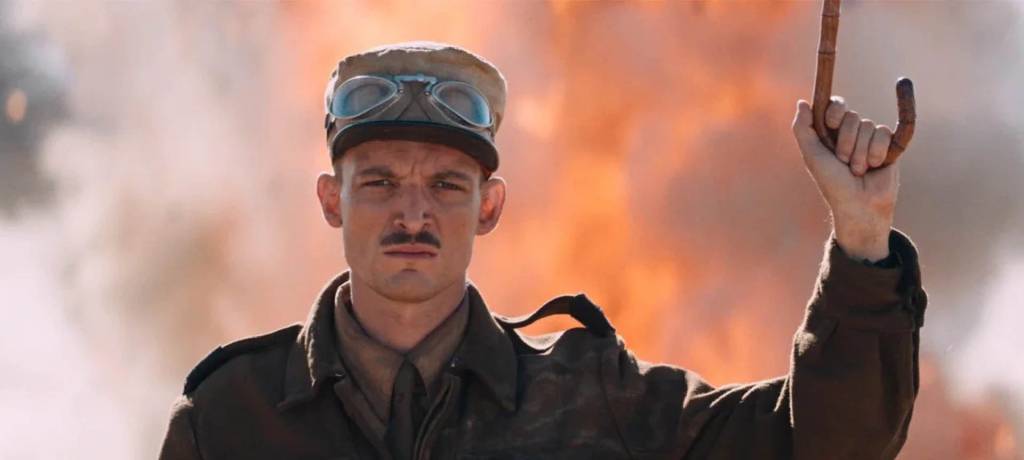
    Orphan is a 2025 Hungarian historical drama, directed by László Nemes and co-written by Nemes and Clara Royer, who also co-wrote Nemes’s Oscar-winning Son of Saul. It had its world premiere at the Venice International Film Festival last August and was released in the UK on 15 May.

    In 1949, Andor Hirsch (Bojtorján Barabas) is reunited with Klára (Andrea Waskovics), the mother he never knew: towards the end of the Second World War, as a babe-in-arms, he had been sent to an orphanage while she had gone into hiding in the countryside. Eight years’ later, they are living in Budapest, a city still reeling from the failed 1956 uprising. Whilst Klára struggles to get by working in a shop, twelve-year-old Andor still waits impatiently for the return of his father from the war.

    As he desperately seeks news of his father from those that knew him, along comes another man from his mother’s past: Mihály Berend (Grégory Gadebois). Berend is a butcher from a small town outside of Budapest and it becomes apparent that, during the war, Berend had in some way assisted Klára to hide from the Nazis, although the manner of this assistance is uncertain and rather suspicious.

    The film follows the inter-relations between these three characters as they each try to find a way forward in the difficult times in which they live. It is a film full of anger, primarily the anger of Andor who simply cannot understand why his father has not yet returned from the war.

    As one expects with Nemes, Orphan is a bleak film. It is shot in black and white on 35mm stock and is screened with an almost-square aspect ratio, all of which adds to its bleakness. Consequently, it is not a comfortable watch however, as with Son of Saul, it is well worth the effort.

  • REVIEW: Colours of Time ★★★★★

    Colours of Time is a 2025 French drama film directed by Cédric Klapisch, who also co-wrote the script with his regular writing partner, Argentinian screenwriter Santiago Amigorena. It had its world premiere at the Cannes Film Festival last May and was released in France on the same day. It was released in the UK on 17 April, and I finally got around to seeing it on Thursday – and I am pleased to report that it was definitely worth the wait!

    In 2024, an extended family becomes aware that they jointly own an abandoned house in Normandy, which local developers are eager to purchase. They appoint four of the thirty or so disparate family members to visit the house and report back. They find family photographs and an impressionist painting which take them back to 1895, when an ancestor, Adele (Suzanne Lindon), set out from the Normandy house to visit Paris in search of the mother she had never met.

    The four are Seb (Abraham Wapler), Guy (Vincent Macaigne), Céline (Julia Piaton) and Abdel (Zinedine Soualem). They become absorbed in their investigation as they seek to understand the inter-relationships of the ancestors in the photographs, whilst learning perhaps more important lessons about the nature of family. Abdel enlists the assistance of an old friend who works at the Musee d’Orsay, Calixte (Cécile de France), to try to ascertain the identity/relevance of the painting.

    Back in 1895, Adele has discovered that her mother is not quite the ‘Lady’ she thought, however, having become reconciled to her new reality, she sets out with the help of two young men, also from Normandy, who she met on the journey to Paris, Anatole (Paul Kircher) and Lucien (Vassili Schneider), to try to identify her father.

    Anatole and Lucien are a painter and a photographer respectively; the possible candidates for Adele’s father are also a painter and a photographer. Consequently, the film needs to be beautifully shot, and the camerawork and cinematography do not let the side down.

    Klapisch’s assured direction is, of course, inch perfect – I have been a huge fan of his work since first coming across him with the ‘Pot Luck’ trilogy. Both threads are equally absorbing, and all of the characters are a delight to spend time with. The acting is of the highest standard, and I particularly enjoyed a cameo performance from Dardenne Brothers’ stalwart Olivier Gourmet, although I will not spoil things by revealing the part he played.

    If you get the chance to see Colours of Time at the cinema then grasp it – it is a joy to watch. I believe it is about to be showing at Picturehouse cinemas over the next week or so.

  • REVIEW: Kokuho         ★★★★★

    Kokuho (literally – ‘National Treasure’) is a 2025 Japanese historical drama film directed by Lee Sang-il and written by Satoko Okudera, based on the 2018 novel Kokuho by Shuichi Yoshida. It had its world premiere at the Cannes Film Festival last May, was a box-office sensation in Japan and was finally released in the UK on 8 May.

    Kokuho is epic, both in terms of its fifty-year timespan and its astonishing ambition. The original novel was over 800 pages, and the initial cut of the film ran four and a half hours, so had to be cut by around one third. The film tells the story of a rivalry and friendship between two boys lasting some forty years, whilst providing an insight into the single-mindedness required for artistic excellence and giving an introduction to, and basic education in, the ways of Kabuki.

    It begins in 1964, where Kikuo Tachibana (Ryo Yoshizawa), son of a yakuza boss, performs an onnagata role at a New Year gathering in Nagasaki. (An Onnagata is a male actor who specializes in playing female roles in kabuki theatre.) This is witnessed by Hanai Hanjiro II (Ken Watanabe), a kabuki master, who is a guest at the party; he sees something special in Kikuo’s performance. At the end of the party, there is an attack by a rival yakuza gang and Kikuo’s father is killed.

    A year later, despite his yakuza background, Kikuo is taken on as an apprentice by Hanjiro, and begins training alongside Hanjiro’s son Shunsuke (Ryusei Yokohama); the two form a brotherly bond. As Hanjiro’s son, Shunsuke is destined to take over his father’s title, but when Hanjiro is injured in a traffic accident and unable to perform, he gives his role to Kikuo, causing a schism in the family. Shunsuke disappears and in his long absence Hanjiro decides Kikuo should inherit his title and become Hanai Hanjiro III. However, during the handover ceremony, Hanjiro falls ill and calls out for Shunsuke before he dies. As a result, Kikuo loses support in the kabuki house and is relegated to supporting roles.

    Meanwhile, Shunsuke returns to a starring role in a rival kabuki house and Kikuo’s yakuza past and an illegitimate daughter he has sired, further tarnish his reputation. He is forced out of the house and out of kabuki. Four years later, he is making a living performing at banquets when he is offered a chance to return to kabuki; again, he teams up with Shunsuke, this time to great acclaim. However, Shunsuke collapses on set, and later has to have a leg amputated below the knee due to diabetes complications. He expresses his desire to perform the onnagata role in ‘The Love Suicides’, alongside Kikuo, before it is too late. The performance is a great success, but Shunsuke is close to death.

    I know I seem to have explained far too much of the plot here, however there is far more to it than these bare bones might suggest. Getting to know the characters is an absolute joy and the journey into their pursuit of artistic excellence at any cost is fascinating. As for the kabuki itself, it is entrancing: the costumes and the performances are wonderfully portrayed and the information provided on screen is sufficient to provide an overall understanding of the art form without being obtrusive.

    I strongly recommend Kokuho: it is beautifully filmed and a fascinating story – I now need to get hold of some tickets to see some real kabuki at the Sadler’s Wells Theatre in July!

  • REVIEW: Miroirs No 3 ★★★★☆

    Miroirs No 3 is a 2025 German chamber-drama written and directed by Christian Petzold. The film had its world premiere at the Cannes Film Festival last May and was released in the UK on 17 April.

    Laura (Paula Beer), a talented music student, is depressed, perhaps even suicidal. Reluctantly, she sets off on a weekend away with her boyfriend and two of his friends but, on arrival, asks him to take her back home, saying she feels unwell. He agrees to drop her at the nearest railway station but loses control of their car on the way and is killed instantly; Laura suffers only minor injuries.

    Twice during this brief introductory sequence, Laura has locked eyes with Betty (Barbara Auer) who stands at the roadside outside her house and witnesses the accident. As the emergency services deal with the aftermath, Laura asks Betty if she can stay with her while she recovers, and so the scene is set. Finding refuge and support, Laura gradually recovers from both the accident and her depression, and she cheerfully helps Betty with the household chores. Betty invites her estranged husband, Richard (Matthias Brandt), and her son, Max (Enno Trebs), to dinner, though they are somewhat reluctant and accuse Betty of acting inappropriately. We learn that Betty and Richard lost their daughter Yelena to suicide and to Betty, Laura has become a surrogate for her deceased daughter, hence the reaction of the men in her life.

    This is a mystery story about grief and family dysfunction. There are hints of Ruth Rendall in the story-telling but unlike Rendall’s stories there is no explanation to the dénouement. Paula Beer and Barbara Auer are excellent in the two central rolls and Petzold is in his element in tight chamber pieces like this. Throughout the film we always have some idea what is going on but we never quite get a clear picture until a final moment of clarity, a coming together, as Laura plays Ravel’s Miroirs No. 3 at a concert, with Betty, Richard and Max watching seemingly contentedly from the audience.

    Miroirs No 3 is a lovely, understated film and is well worth the effort, if you can still find a screening.

  • REVIEW: Romería       ★☆☆☆☆

    Romería is a 2025 Spanish drama film written and directed by Carla Simón. The film had its world premiere at the Cannes Film Festival last May and was released in the UK last Friday, 8 May.

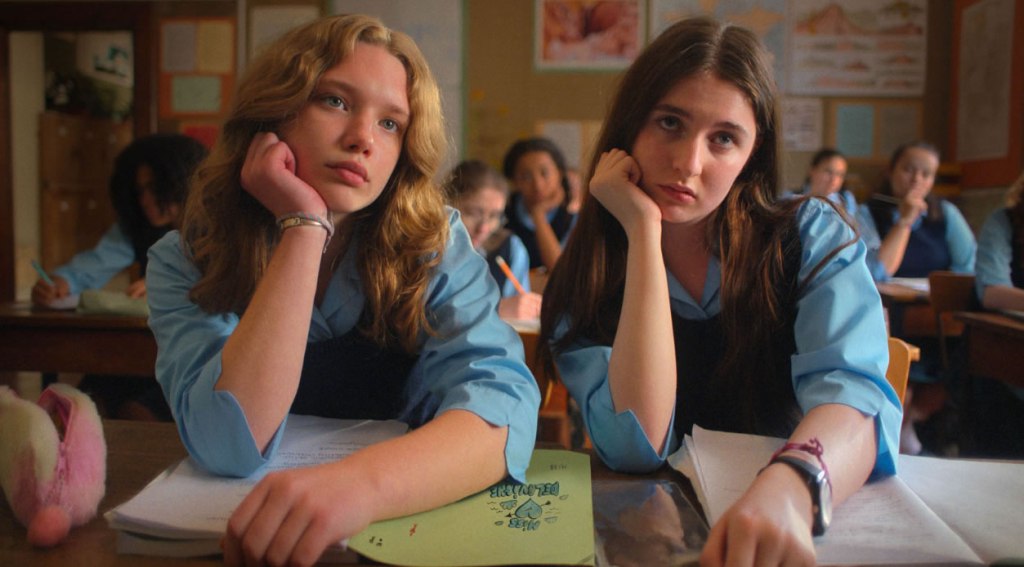
    It is 2004. 18-year-old orphan Marina Piñeiro (Llúcia Garcia), is told that she must have herself recognised on her father’s death certificate in order to apply for a university scholarship. So, she travels to Vigo to meet her paternal family and rectify this situation. As she meets various relatives for the first time, she questions them about her parents, and we become aware that there are a number of discrepancies in the stories told. It quickly becomes apparent that both her father and her mother were serious drug users, indeed both died as a result of their drug-taking, but there is a deal of uncertainty over the timing and manner of her father’s death.

    There is then a dreamlike sequence where Marina travels back in time to 1983 and we watch her parents at the height of their drug-taking, seemingly happy together, although gradually the heroine takes hold. And that is about it really. I should just say that the word Romería means pilgrimage and that this is apparently ‘autobiographical fiction’.

    That is the plot, so what is the issue? Why only one star? To begin with, I didn’t like Marina. She seemed totally self-absorbed: I found her annoyingly smug and often downright rude to her extended family, especially odd since she was meeting them for the first time. As regards the dream sequence, unfortunately I find films about people taking drugs to be incredibly boring – they may think it is all wonderful, but I find it is a bit like being the nominated driver on a stag night – you just want it to end. Drug taking is of course very self-indulgent, to hell with the rest of the world, and sadly so was this film. I had no interest at all in what happened to Marina – to my mind she probably deserved it.

    Romería was very much a wasted afternoon for me.

  • REVIEW: The Rose of Nevada ★★☆☆☆

    The Rose of Nevada is a 2025 British science-fiction drama film written, edited, composed and directed by Mark Jenkin. The film had its world premiere at the Venice Film Festival last August and was released in the UK on 24 April.

    Now this is a tricky one to write because I understand that a lot of people will really like this film, however for me it just doesn’t work. To start with, they call it sci-fi but it isn’t really – it is more like a ghost story. And I should come clean and admit that whilst I am not generally a big fan of science-fiction, I positively loathe ghost stories. Except those that are intended to make me laugh, I suppose. So, what is it about?

    In a near-deserted Cornish fishing village, a fishing boat, The Rose of Nevada, reappears in the harbour three decades after the vessel and its crew fell victim to the sea. That loss is still felt deeply; this small community never really recovered from the tragedy.

    The boat’s owner, Mike (Edward Rowe), sets about rounding up a crew for a new fishing expedition. He recruits a grizzly old captain, Murgey (Francis Magee); a young father struggling for money, Nick (George MacKay); and Liam (Callum Turner), an itinerant worker who sleeps rough on the dock. They set sail on their new fishing expedition and when they return to port they have returned to thirty years previously. The two youngsters, Nick and Liam, seem rather confused by this, although weirdly the captain seems none too bothered. Everyone at the port is, of course, thirty years younger than when we first saw them. Nick and Liam try to negotiate the village they never knew, but have heard lots about.

    Each new expedition brings with it the possibility that, basically, when they return it might be now, but it might be then. It is full of the past echoing the present and all very ghostly, but without any purpose. And it is all very beautifully shot, there are some great fishing scenes, but quite honestly, I couldn’t see the point. I would have liked to have got to know the characters more and understood some kind of reality and meaning to their story, but that didn’t happen, perhaps because there was none.

    The Rose of Nevada is basically a ghost story, and I don’t really like ghost stories – my suspension of disbelief just does not go as far as ghosts.

  • REVIEW: The Wizard of the Kremlin ★★★☆☆

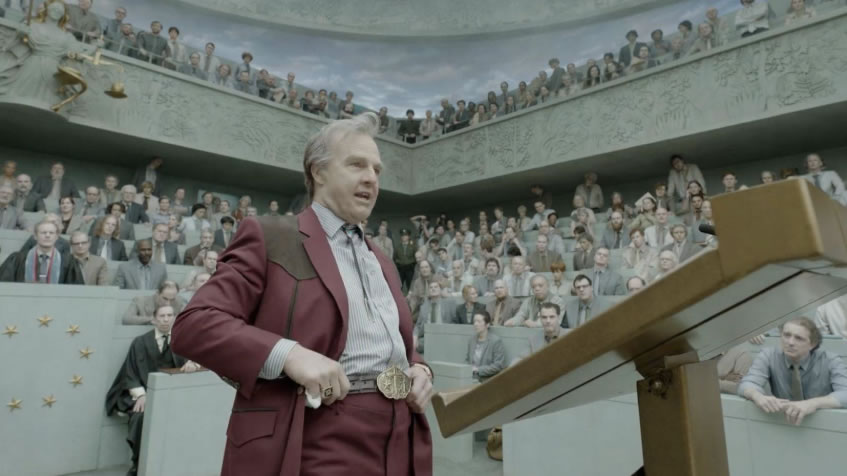
    The Wizard of the Kremlin is a 2025 English-language political satire directed by French filmmaker Olivier Assayas about Russian politics after the Soviet era! Assayas co-wrote the screenplay with Emmanuel Carrère, based on the 2022 novel by Giuliano da Empoli. The film had its world premiere at the Venice Film Festival last August (where it was nominated for the Golden Lion) and was released in the UK on 17 April.

    In the early 1990s, Vadim Baranov (Paul Dano) is a young artist, apparently enjoying the new-found freedoms of post-Soviet Russia, whilst secretly harbouring ambitions to take his share of the new opportunities. His political acumen is noticed by media magnate Boris Berezovsky (Will Keen), who takes him under his wing, however to Baranov, Berezovsky is just a stepping stone to Vladimir Putin (Jude Law) whose star is very much in the ascendancy.

    This is the spine-chilling story of Putin’s rise to power through the lens of Baranov, a combination of Machiavelli and Rasputin, apparently based on real-life shadowy Russian politician Vladislav Surkov. The journey of Baranov from young artist through small-time government official to Putin’s ruthless and amoral right-hand-man ought to be spellbinding, but sadly Dano’s performance is completely lack-lustre. His steadily paced sing-song delivery frankly becomes annoying and what should be mesmeric becomes simply dreary. It is hard to say whether this is poor acting or poor direction, but something has gone badly wrong here.

    The film is saved, however, by a wonderful performance from Law as Putin, who is utterly convincing. His Putin mannerisms, the thin smile, the cursory handshake, and especially the wince of disgust at weakness and disloyalty, are just right.

    Ultimately, I suspect that dogged adherence to the novel (which I have not read) may have ruined what could have been a wonderful film. A little more comedy would have injected some much-needed light and shade, and could have given us a considerably more entertaining affair; perhaps in the hands of Armando Iannucci, we would have had The Death of Stalin updated for a new tyrant. As it is, The Wizard of the Kremlin just fails to deliver on a very promising premise.