RICHARD’S BLOG

  • REVIEW: Hamnet   ★★☆☆☆

    Hamnet is a 2025 British/American historical-fiction film, directed by Chloé Zhao, who co-wrote the screenplay with Maggie O’Farrell, based on O’Farrell’s novel of the same name. It had its world premiere in August at the 2025 Telluride Film Festival, which is in Colorado, apparently, and was released in the UK yesterday, 9 January.

    I feel I must stress that describing Hamnet as historical-fiction might be considered misleading; there are so few genuine facts involved that ‘fictional-history’ would seem nearer the mark. Lovers of the book, and I believe there were a lot of lovers of the book, will no doubt like the film, but will say, ‘it wasn’t as good as the book’ – don’t they always? I did not read the book, so came to this story cold. Unfortunately, I also left it pretty cold, too.

    My biggest problem is that since so little is known about Shakespeare’s wife, Anne Hathaway (Jessie Buckley), her backstory has simply been made up. Her name has been changed to Agnes, and she has been made into some kind of weird nature-obsessed witch (with a pet falcon), which seems improbable in the extreme. To say I did not like the characterisation is an understatement – I found it positively irritating. Then we have Will Shakespeare himself (Paul Mescal) whose characterisation constantly reminded me of Connell from Normal People (also played by Mescal) rather than any realistic depiction of what England’s greatest ever playwright and poet might have been like.

    I even found Hamnet (Jacobi Jupe), title character and son of the above, to be a moody and irritating little bugger, although to be fair this might have been transference of the opinion I had already formed of the parents. The only believable portrayal was of Mary Arden, Shakespeare’s mother (Emily Watson) – when she told Will not to marry Agnes, since she was a witch, in my opinion he should have listened to her.

    Interestingly, the children were born without umbilical cords, although why that should have annoyed me given the total absence of any kind of realism, I am not sure, but it did. On to the final twenty minutes, and we had the opening performance of Hamlet, performed in a style which did not feel at all Elizabethan to me; but now I am just nit-picking. My boat was not floated; in fact, I suspect my boat may have been the Mary Rose.

    If you liked Hamnet the book, go see the film – you might like it, you clearly don’t mind the balance of fiction and history, but you will probably conclude it is not as good as the book; if you didn’t like the book, then definitely don’t bother; if you didn’t read the book, think carefully – if you like your ‘history’ to be invented, then who knows, you might not find it as irritating as I did.

  • REVIEW: Marty Supreme ★★★☆☆

    Marty Supreme is a 2025 American comedy drama film, directed by Josh Safdie from a screenplay by Ronald Bronstein. It had its world premiere at the 2025 New York Film Festival in October and was released in the UK on Boxing Day.

    The film, set in 1952, tells the story of around nine months in the life of Marty Mauser (Timothée Chalamet), a fictional character loosely based on the American table tennis legend Marty Reisman. Reisman was possibly America’s greatest ever table-tennis player, although enthusiasts of the sport may suggest Dick Miles could have taken him the distance on that claim. However, if Reisman wasn’t quite America’s greatest player, he was certainly America’s greatest table-tennis showman and hustler (at one time performing a table-tennis warm-up act for the Harlem Globetrotters), and this is where Safdie has concentrated his film.

    The story begins at the British Open Championships in London and ends on the eve of the World Championships in Japan. However, both these tournaments are fictionalised versions of the real thing and, not in any way a spoiler for the film, Reisman actually won Bronze in the 1952 World Championships Men’s Doubles, which was played in Bombay, not Tokyo.

    Marty Supreme is a relentless comedy odyssey, played at breakneck speed, involving a series of highly unlikely situations in which our ‘hero’ finds himself, many of which are unbelievable and yet, may well be based on facts. It is entertaining, but I think I went along to see some kind of sporting biopic and may have taken a little while to tune myself into the comedy.  

    However, Chalamet was very good in this marmite role, and to be fair at times I was not sure whether I loved him or hated him as a character, but he certainly made his mark. As his older love interest, wealthy, retired actress and socialite, Kay Stone, Gwyneth Paltrow was excellent, as was Odessa A’zion as Rachel Mizler, Marty’s childhood sweetheart, now married to another but carrying Marty’s baby.

    However, ultimately, with the benefit of a couple of days to dwell on what I saw, I feel there are some very disturbing themes which somehow seem to have been lost in all the hype. Narcissistic heroes are nothing new, although in Mauser this is taken to extreme; his total self-obsession and focus on his own dreams leaves everyone, friend or foe, drowning in his wake, and a possible redemptive final scene is, for me, far too little, far too late. The unapologetic toleration of his cruelty, much of which is somewhat unnecessary and gratuitous, is a little difficult to bear at times and the way Jewish identity and Holocaust memory are portrayed left me feeling rather uncomfortable. Having said all of that, Marty Supreme is a (slapstick) comedy, and is probably best taken as nothing more than that. It is sure to be a contender at the upcoming award ceremonies. And, if nothing else, the actual table tennis scenes are good to watch (if like me you enjoy watching great table tennis).

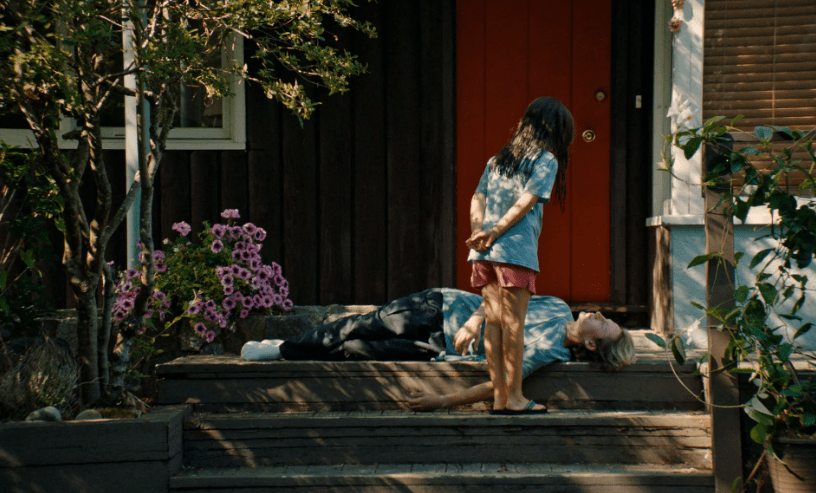
  • REVIEW: Sentimental Value ★★★★☆

    Sentimental Value is a 2025 Norwegian drama film, directed by Joachim Trier, who co-wrote the script with Eskil Vogt. It had its world premiere at the Cannes Film Festival in May (where it won the prestigious Grand Prix) and was released in the UK on Boxing Day.

    The film centres on the difficult relationship between Norwegian film director Gustav Borg (Stellan Skarsgård) and his two grown-up daughters: Nora (Renate Reinsve – star of Trier’s The Worst Person in the World) and Agnes (Inga Ibsdotter Lilleaas). Borg had left his family (and Norway) when his marriage to Sissel had failed but after she dies, he returns to reclaim the family house. His daughters have grown to resent him, partly because of his extended absence, partly due to his drinking problem, and partly due to his obsessive focus on his own career at the expense of his family.

    However, Borg’s career is now on the slide. He has written a new film, inspired by his mother’s suicide, with Nora in mind as the lead actress: she is a successful stage actress, and he feels that her participation will make funding the project easier. When Nora refuses even to read the script, Borg offers the role to American film-star Rachel Kemp (Elle Fanning). As well as Nora, Borg wishes to use Agnes’s son to play an important role in the film, just as he used Agnes in one of his early films when she was just a child, but Agnes also objects to this.

    This is effectively a story about art versus family responsibility: Borg believes that to become a great artist, one must focus entirely on the art at the expense of all other matters; as he remarks to his daughters, ‘you will never write Ulysses while driving the kids to soccer practice’.

    The acting is uniformly excellent and the writing and direction, the style of which is clearly a nod to that of Ingmar Bergman, is Trier’s most mature and accomplished to date. My only criticism is that it feels just a little baggy at times and, had its 133 minutes been condensed to around two hours with some judicious cutting, it might have been even better.

    Having said that, Sentimental Value is a very good film indeed and will undoubtedly be a contender at all the coming award ceremonies. I heartily recommend it.

  • REVIEW: Nuremberg   ★★★★☆

    Nuremberg is a 2025 American, fact-based, historical drama, written and directed by James Vanderbilt, based on The Nazi and the Psychiatrist by Jack El-Hai. It had its world premiere at the Toronto International Film Festival in September and was released in the UK on 14 November. I finally got around to seeing it yesterday, at the Vue in the Leeds Light.

    Nuremberg recounts the story of Reichsmarshall Hermann Göring (Russell Crowe), Hitler’s former second-in-command, from his surrender to U.S. forces in May 1945, through to his trial for crimes against humanity (amongst other charges) in October 1946.

    These trials were ground-breaking, in that this was the first time anyone had been prosecuted for crimes against humanity and, whilst they were not actually the first ever prosecutions for war crimes, they were the first modern-day prosecutions and were the foundational trials that shaped modern international justice for war crimes.

    I visited Nuremberg earlier this year and spent several hours in the ‘Memorium Nuremberg Trials’ museum, so I had actually visited the court room where much of the action takes place. Before going, I had watched Stanley Kramer’s 1961 film Judgment at Nuremberg. So I felt reasonably well informed and was most definitely interested in the subject matter.

    The film centres on the relationship between the American army psychiatrist Major Douglas Kelley (Rami Malek) who is summoned to Luxembourg to evaluate the mental health of the twenty-two Nazi leaders under Allied custody who have been selected for prosecution, and Göring, who is one of the twenty-two. Having been pronounced fit to stand trial, they are all flown from Luxembourg to Nuremberg for the trial. The principal prosecutor was US attorney Robert H. Jackson (Michael Shannon), ably supported by British MP and Barrister Sir David Maxwell Fyfe (Richard E. Grant).

    Was the film historically accurate? So far as I can gather, reasonably so. Did the cast do justice to this serious and important subject-matter? Almost. Crowe was remarkably good as Göring, depicting Hitler’s number two with a blend of dignity, charm and total narcissism that worked exceptionally well. Both Jackson and Grant performed their parts well, and with the appropriate level of gravitas. The problem to me was Dr Kelly, both in the writing, perhaps overstating his role and importance in the prosecution process, and in the casting of Malek, who simply seemed wrong for the role, at time his characterisation appearing just plain silly.

    However, the investigation into the character of Hermann Göring was absolutely fascinating, as was the importance of the trial, the need to identify and ‘prove’ the presence of evil behind Nazism and to establish the collective responsibility of the Nazi hierarchy. I found those court-room scenes particularly moving.

    I do now want to spoil the film for anyone by giving away too much, but I do want to point out that the film includes an extended excerpt from the footage from the camps which was shown to the court, the first time it had been shown in a public forum. This material is very graphic, and I would hope very upsetting, regardless of whether or not you have seen these images before. I have seen reviews which object to the inclusion of this footage; I feel it was vital to grounding the film as a historical document, rather than just a courtroom thriller.

    If you are interested in the holocaust (and you should be) then I recommend Nuremberg. It is a fascinating dissection of evil and, specifically, of the character of Hermann Göring.

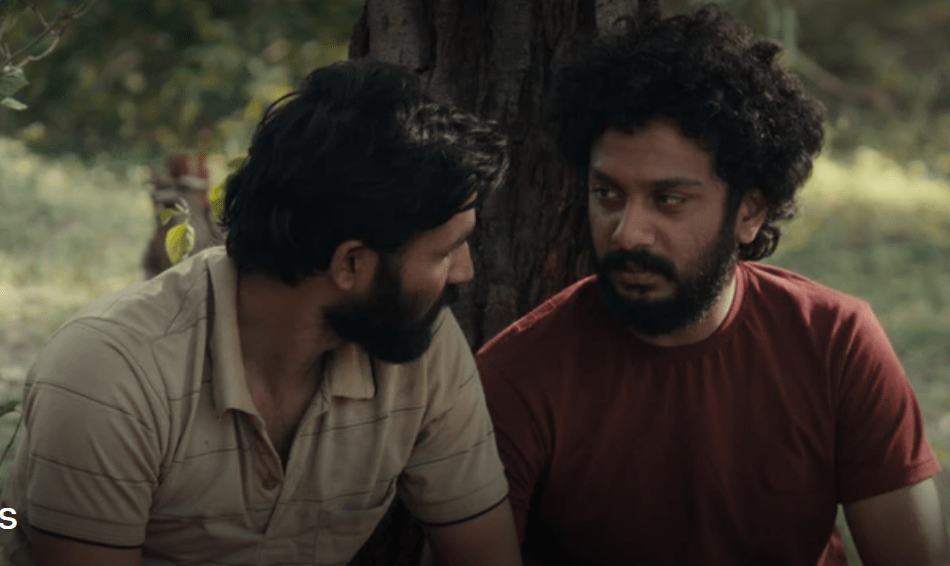
  • REVIEW: It Was Just an Accident ★★★★☆

    It Was Just an Accident is a 2025 thriller, written and directed by Iranian filmmaker Jafar Panahi. It had its world premiere at the Cannes Film Festival in May, where it won the Palme d’Or, and has been selected as the French entry for Best International Feature at the coming Oscars. The film was shown at the London Film Festival in October and was released in the UK yesterday, 6 December.

    It Was Just an Accident follows Vahid (Vahid Mobasseri) who quite by chance has come across the man who tormented his life whilst he was incarcerated by the Iranian authorities as a political prisoner: Eghbal, also known as ‘pegleg’ (Ebrahim Azizi). Seeking revenge, Vahid takes Eghbal hostage. However, not absolutely certain he has the right man, he then travels around Tehran in a van with his tormentor safely secured in the back, gathering a disparate group of former prisoners in an attempt to confirm Eghbal’s identity.

    This is a film about state-sponsored torture and its long-lasting effects, both physical and mental, on the victims. Consequently, one would expect a dark harrowing film. However, whilst the story is dark and, I have no doubt, will remain with me for a very long time, Panahi’s touch is extremely light and there is a good deal of comedy, almost slapstick, in what becomes a ‘round-Tehran-road-movie’. Some of the interactions with those who are not directly involved in the story are genuinely laugh-out-loud funny. And surely it is this juxtaposition which deservedly won the Palme d’Or. The light and shade within the storytelling takes what could have been a horrific revenge-thriller and makes it a film about the very nature of what it is to be human.

    I first saw this film at the LFF. The cinema was full and there was an air of expectation verging on excitement – the audience responded with laughter, which I am sure was the director’s intention. I saw the film again yesterday at the National Film and Media Museum in Bradford. There were nine or ten people in the audience – nobody laughed. Consequently, it felt much darker.

    I strongly recommend It Was Just an Accident. It is a beautifully made film, full of heart and humanity, and yet it is a timely reminder that in the west we live in something of a protective bubble.

    Incidentally, whilst away from Iran this week promoting the film at the Marrakech International Film Festival in Morocco, Jafar Panahi has been sentenced to a one-year prison term on charges of propaganda against the state. He will serve the term on his return to Iran. He is no stranger to Iranian prisons and, as a proud Iranian, he will return and he will serve his sentence.

  • REVIEW: Blue Moon ★★★★☆

    Blue Moon is a 2025 American biographical comedy-drama film, directed by Richard Linklater from an original script written by Robert Kaplow. It had its world premiere at the Berlin International Film Festival in February (where it was nominated for the Golden Bear) and was released in the UK on 28 November.

    The film is set in Sardi’s restaurant on Broadway on 31 March 1943, the opening night of Rodgers and Hammerstein’s Oklahoma!. However, the subject of the drama is neither of these, but Lorenz Hart (Ethan Hawke), ex-writing partner of Rodgers, barely eight months before his untimely alcohol-induced death. The single location would seem to lend itself to a chamber-play rather than a film, and certainly the first half, which takes place at the bar, is particularly theatrical. Here we learn about Hart through his interactions with Eddie, the barman (Bobby Cannavale), Morty, the piano player (Jonah Lees), and EB White, author of Stuart Little and Charlotte’s Web (Patrick Kennedy), who just happens to be in the bar. The interplay between these four characters is a delight; I was particularly struck by Kennedy’s portrayal of White, and Ethan Hawke gives the performance of a lifetime as Hart.

    In the second half, the post-show party arrives, opening up the film with an extensive cast of characters, including the girl with whom Hart is totally infatuated, Elizabeth Weiland, a Yale art student (Margaret Qualley). This might seem a little odd for an openly gay man, however Hart’s infatuation speaks volumes about his addictive personality. The arrival of Richard Rodgers (Andrew Scott) provides an insight into what went wrong with the Rodgers and Hart writing partnership. Whilst this was all most informative and helped to give a more rounded portrait of Hart as a flawed genius, I did find myself missing the wit and charm of the four-handed opening 45 minutes.

    I must mention the music, which was a delight from start to finish, and sets the tone for the whole film, together with the quality of the acting, which is excellent throughout.

    If you have any interest at all in the great Broadway musicals, then I thoroughly recommend Blue Moon to you; and even if you don’t, it is a most enjoyable way to spend 100 minutes.

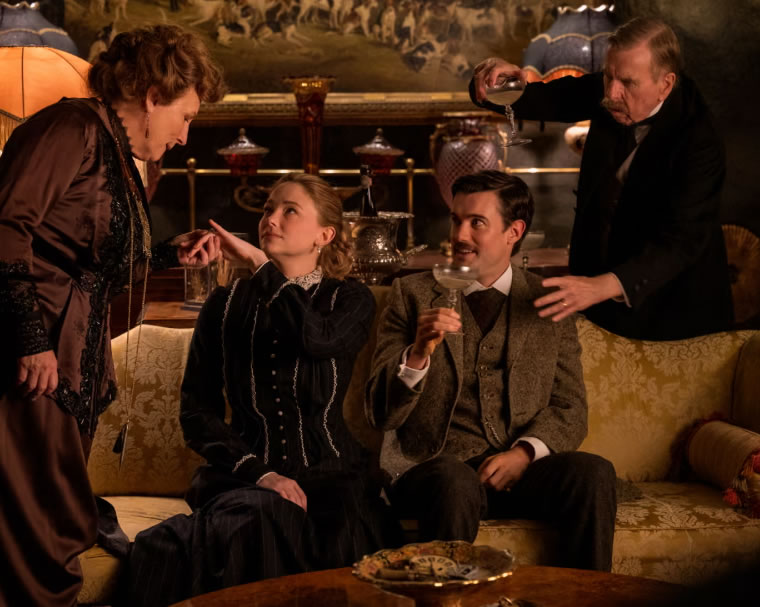
  • REVIEW: The Choral ★★★☆☆

    The Choral is a 2025 British historical comedy-drama film, directed by Nicholas Hytner from an original script written by Alan Bennett. It had its world premiere at the Toronto International Film Festival in September, and was released in the UK on 7 November.

    The film is set in the fictional Yorkshire town of Ramsden in 1916, as the terrors of the Great War ravage Europe. Conscription came into force at the beginning of that year, and those who did not volunteer for active service a year or so earlier are now being drafted, whether they like it or not.

    Consequently the local choral society, which has already committed to its next performance, does not have the necessary manpower to deliver. To begin with they are losing their choirmaster and so the committee must find a replacement, which they debate in a scene straight out of JB Priestley’s When We are Married. They then appoint, against their better judgement, Dr Henry Guthrie (Ralph Fiennes) who unfortunately has just returned from a musical position in his beloved Germany and may have other skeletons in his closet to boot! (ee bah gum). Guthrie reluctantly agrees to accept the position, provided he has total artistic freedom, and suggests that instead of the planned work by a German composer, they produce Edward Elgar’s Dream of Gerontius. Guthrie then sets about touring the local pubs to identify any young men who can sing in order to recruit them into the choir and get them knocked into some sort of shape prior to the performance. And finally, on the afternoon of the show, who should pop by but Elgar himself (Simon Russell Beale) to throw a late spanner in the works.

    So, a good old British feelgood film, in the tradition of, say, Brassed Off? Except this is no Brassed Off. To begin with, the plot is very clunky with lots of one-off events introduced just to move the story forward. Secondly the characterisation is woefully thin – the only vaguely rounded character is Dr Guthrie, and he is very much dependent on the acting of Fiennes rather than the quality of the writing. As for the rest of the cast, it reads like a Who’s Who of British character actors (Roger Allam, Alun Armstrong, Mark Addy, Ron Cook and so on), all of whom are left to flounder with poorly defined caricatures. As for the portrayal of Elgar, Beale hams it up preposterously, but to be fair he has nothing to work with – I am sure if Elgar were alive today, writs would be issued.

    Finally the story itself bites off far more than it can chew, and so is utterly lacking in focus. We deal with: the returning wounded, the faithless girls back home, the white-feather brigade, the need to lose one’s virginity prior to going to fight, the small-town hypocrisy surrounding the local prostitute, even the difficulty of masturbating when you have had your right arm shot off (I kid thee not). There are more serious matters of anti-German sentiment and latent homophobia, although interestingly not racism: the fact that the female star of the choir is a young black girl, Mary (Amara Okereke) passes without comment.

    I know that traditionally with a stage play the buck stops with the playwright and with a film it stops with the Director, but when Bennett is the writer and Hytner the Director, we are in unusual territory. And by and large my criticisms are with the writing, so for me the book (sic) must stop with Bennett.

    The cinematography is nice, as is Elgar’s music, and it is very pleasant to look at the local scenery of Saltaire and Keighley station, both of which are very close to where I live. So my main criticism of Hytner is that he should have told Bennett that the screenplay needed to be considerably tighter and more focused, the characters needed to be properly defined, and the plot needed to be much smoother.

    So why three stars and not two? Because this is a film that a lot of people will enjoy without worrying about the bits that annoy me. If it is on the TV on a wet Sunday afternoon and you have nothing much else to do, then it is a not too unpleasant way of whiling away a couple of hours. Just keep your artistic expectations low, and you should be all right.

  • REVIEW: The Mastermind ★★★★☆

    The Mastermind is a 2025 American ‘slow cinema’ film, written and directed by Kelly Reichardt. It had its world premiere at the Cannes Film Festival in May, and was released in the UK on 24 October.

    The film is set in 1970, as the free-living experiment of the 1960s is coming to an end and America is still locked in deep unrest over the continuing Vietnam war. J.B. Mooney (Josh O’Connor) is an unemployed carpenter in Framingham, Massachusetts, son of, and one senses a bit of a disappointment to, a local judge. Whilst clearly not a criminal mastermind in the conventional sense, nevertheless he spends his time planning an art theft from the local public gallery. We watch as he ‘practices’ with the theft of a tiny figurine, presumably to assess the security systems, then plans in minute details the theft from the gallery of four abstract paintings by Arthur Dove, an early American abstract modernist. He then assembles a small gang to undertake the crime.

    You will notice that I have studiously avoided the word heist. This is because if you are the sort of person who goes to see ‘heist movies’, this is almost certainly not for you. The film has wooed the critics, currently holding a 92% approval rating on Rotten Tomatoes, and yet the RT audience reviews show a disappointing 38% approval. Why is this? Well, Kelly Reichardt is an advocate of ‘slow cinema’. Her Western film, Meek’s Cutoff, followed a group of settlers on the Oregon Trail and was a heartbreakingly realistic portrayal of how hard that journey must have been – but there were no wild hordes of red Indians firing arrows at gun-toting cowboys – it was not that sort of a Western. Similarly, The Mastermind follows JB through the planning and execution of the theft; the aftermath, when things do not go entirely according to plan; his betrayal and the loss of the paintings; and his flight from the forces of the law, having become a wanted man. It is about character, motive and detail. And even then we do not get any easy answers. I like to think his motive was to do something significant, to make his mark on Framingham, to prove his father wrong; however I could very easily be wrong. It might have been just for the money, but if so his choice of painting seems a little obscure – there were more valuable artworks available.

    So if you like heist movies with lots of car chases and bank vaults being blown open, do not go to see this – you will join the 62% of viewers who think it was way too slow. Conversely, if you like your cinema gently paced, real, intelligent and thought-provoking, I whole-heartedly recommend it.

  • REVIEW: After the Hunt ★☆☆☆☆

    After the Hunt is a 2025 American psychological thriller, directed by Luca Guadagnino and written by Nora Garrett. It had its world premiere at the Venice International Film Festival in August, was shown at the BFI London Film Festival and was released in the UK last Friday, 17 October.

    Yale University philosophy professor Alma Imhoff (Julia Roberts) is put in a difficult position when her apparently brilliant student, Maggie Resnick (Ayo Edebiri), claims that she was sexually assaulted by one of Alma’s peers, Hank Gibson (Andrew Garfield). So it is a ‘her word against his’ campus drama, in the manner of David Mamet’s Oleanna which so wowed theatre (and film) audiences back in the 1990s. And of course, in the post #metoo era, this has the potential to be a real hot potato.

    Now let’s add that Alma and Hank had a bit if a thing back-in-the-day; and that they are now in a battle over who will gain tenure in the philosophy department; and that Maggie is a lesbian who has a crush on Alma; and that Maggie is actually not quite so brilliant – she probably plagiarised her dissertation; and that Maggie is the daughter of a major donor to the University; and that Alma has some significant stomach complaint; and that Maggie is black, and is having a relationship with someone non-binary.

    If anyone can think of a potential issue that is missing from the above, it is probably in the film, but I just missed it from my list. Yes, this is a totally unfocused, confusing mess. Whilst Julia Roberts and Andrew Garfield do their best with the material they have, there is only so much a good actor can do for a bum script.

    And the real issue is that the characters, as written, are all incredibly difficult to like. I just would not want to spend any time with any of them. Two hours into this 139-minute film, I quite honestly could not have cared any less about whether Alma had stage IV colon cancer or irritable bowel syndrome! And nor did I care whether Hank raped Maggie or whether Maggie lied. And that is terrible – how can a film about such a personal and devastating act leave the viewer so completely cold.

    I strongly recommend that you do not bother with this mess of a film – far from a hot potato, it turns out to be warmed-over Cadbury’s Smash (if you don’t get the reference, google it)! It is definitely not worth either your time or your money.

    And incidentally, if Andrew Garfield’s table manners are anything like his character’s, then if he invites you out for a curry, just say no!

  • LONDON FILM FESTIVAL 2025

    I have just spent a very enjoyable five days at the London Film Festival, where I saw fifteen films (and slotted in a piece of theatre too).

    The overall standard of the films was very high, and I would happily recommend ten of them, however, as one expects when seeing so much, there were one or two duds as well.

    I will post the full reviews of what I saw when the films get their UK releases, however here is a whistlestop tour of what you should be looking out for and what you should take great pains to avoid:

    For me the film of the festival, deserving a 5* rating was:

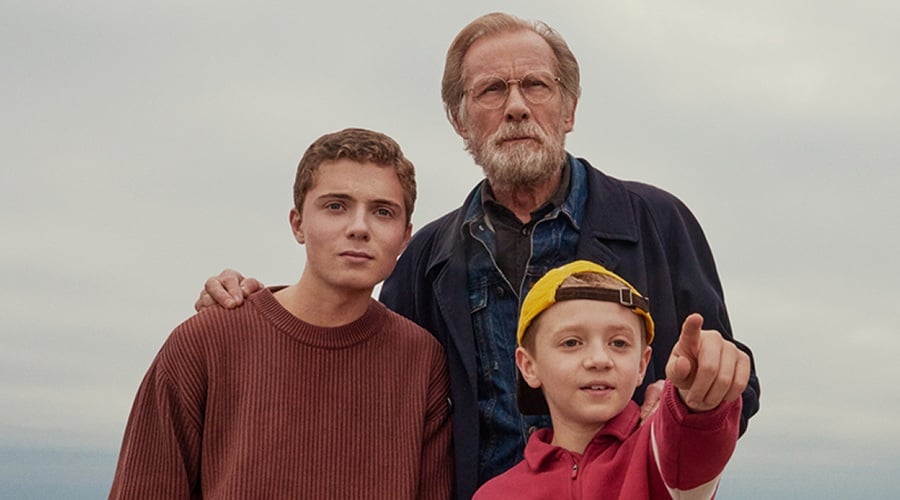
    & Sons, by Argentinian director Pablo Trapero, performed in English with Bill Nighy leading a terrific ensemble cast.

    There were seven films worthy of 4* ratings (listed here in the order in which I saw them):

    It was just an Accident – Jafar Panahi’s Palm d’Or winner, somehow blending almost slapstick humour with a devastating indictment of state-sponsored torture in Iran;

    No Other Choice – Park Chan Wook’s hilarious satire on the world of employment, set in the paper industry, as I was for the last 23 years;

    Orphan – László Nemes’ heartrending story of a Hungarian child’s search for his father, from the end of the second world war to the late 1950s;

    Rental Family – Hikari’s rich and heartwarming tale of the need to find real connections in an increasingly commoditised world;

    Nouvelle Vague – Richard Linklater’s homage to the French new wave, and in particular to Jean-Luc Godard;

    The Stranger – François Ozon’s adaptation of Albert Camus’s classic novel L’Étranger.

    La Grazia – A return to form for Paulo Sorrentino, united with Toni Servillo, who plays a president in the final months of his tenure.

    Not quite as good as these, but certainly worth a look, were two films worth 3 ½ * – that is cheating, I know, but 3 didn’t seem quite enough!

    Blue Moon – Richard Linklater’s portrait of one day (in fact one evening) in the life of Lorenz Hart, following the termination of his musical partnership with Richard Rogers;

    Father Mother Sister Brother – Jim Jarmusch’s take on family relationships, consisting of three short films under one umbrella title.

    And finally, the five that disappointed me, the first four worth just 2*:

    Silent Friend – Ildikó Enyedi’s story of a tree(!);

    The Souffleur – Gastón Solnicki’s story of a hotel;

    The Fence – Clare Denis’s adaptation of a stage play by Bernard-Marie Koltès;

    Lady – Samuel Abraham’s mockumentary about the growing irrelevance of the upper classes;

    And finally, with 1 (begrudged) *:

    After the Hunt – Luca Guadagnino overly-complex campus drama – the worst film of the week, and now out at the cinema, so I will post a full review in the next few days.

    So London is done for another year – though many of these powerful films will stay in my mind for quite some time to come.