RICHARD’S BLOG

  • REVIEW:  Along Came Love ★★★★☆

    Along Came Love (Temps d’aimer) is a French period drama set in the 1950s and 60s about repressed desires, forbidden love and the effects of living with the resulting shame. The film was directed by Katell Quillévéré, who also co-wrote the screenplay with Gilles Taurand. It premiered at the 2023 Cannes Film Festival (where it was in competition for the Queer palm) and was released in France later that year. However it only received its UK release last week. 

    Madeleine Villedieu, played by Anaïs Demoustier, had a brief but passionate love affair with a Nazi doctor. This resulted in her being shamed in front of her village when the allies liberated the town from their German occupiers; it also resulted in a son. François Delambre, played by Vincent Lacoste, is a closet homosexual. Whilst homosexuality has been legal in France since the end of the eighteenth century, it still carried a certain stigma in the 1950s.

    At the beginning of the film, Madeleine is working as a waitress in the restaurant of a large seaside hotel, and caring for her son. She has no idea whether his father survived the war. Here she meets François, and they tentatively begin a love affair. Madeleine confesses her shameful secret almost at the beginning of their relationship; François keeps his to himself. Their affair blossoms and they marry. The film follows a period of some fifteen years, charting their lives, as François’ studies to become a professor and Madeleine works as a manageress in a nightclub to pay the bills. However, the shames of their pasts are never too far behind them. When Madeleine discovers her husband’s sexuality, they somehow manage to build on their deep love for each other, and she has a second child

    At times, a little melodramatic and unsubtle, the story is very personal to Quillévéré, who has stated that it is autobiographical, inspired by her grandmother. Anaïs Demoustier gives a wonderful, nuanced performance – so much of the story in the first half-hour of the film happens in her facial expressions. François Delambre is also excellent throughout. I found I cared very much for both these central characters, and as such I was happy to spend time with them and found it easy to sympathise with their plight.

    Along Came Love is poignant and sad, but time spent watching it is time well spent. I thoroughly recommend it!

  • REVIEW:  The Salt Path ★★☆☆☆

    The Salt Path, released in the UK last Friday, is an adaptation of Raynor Winn’s memoir of her long-distance walk with her husband Moth along the northern section of the Southwest Coast Path. It is directed by Marianne Elliot (her first feature-length film), from a script by Rebecca Lenkiewicz, so it has a solid theatrical pedigree behind it.

    The Winn’s have lost their farm, due to a dodgy investment that Moth made, although this is never really properly explained. There is a suggestion that it was not really their fault, but this is also not properly explained. Moth has recently been diagnosed with a rare and incurable wasting disease, which he is told will at some stage prove fatal. There is the back story in a nutshell, and I liked that it was teased out gently through a series of brief flashbacks however, for me, there needed to be a more complete explanation.

    In order to get over the trauma of having lost everything (except each other) and to find time and space to consider the rest of their lives, they set off to walk the first section of the Coast Path, from Minehead to Land’s End, armed with just £40 per week, a guidebook, a tent and a couple of sleeping bags.

    Jason Isaacs plays Moth, and by and large I enjoyed his performance, but unfortunately Gillian Anderson, as Ray, has a rather irritating regional accent which comes across as a bit whiny. However that is not the real problem with this film. Given the theatrical pedigree of the creative team, you would have thought they would understand how to build dramatic tension. And yet, the film comes across as very flat – it is just one walking adventure after another, interspersed with the flashbacks and a brief respite with their friend Polly, played by Hermione Norris. I know this is a true story and the Winn’s tale is genuinely inspiring, but as a film this is slow, flat and (whisper this) quite boring in places.

    Consider the many British ‘Odyssey films’, including: Joss Ackland in Michael Frayn’s excellent First and Last, back in 1989; James Bolam in The Missing Postman, 1997 (both technically made for television rather than film); Timothy Spall in The Last Bus, 2021; Michael Caine in The great Escaper, 2023; Jim Broadbent in The Unlikely Pilgrimage of Harold Fry, 2023; and so on. Alas, The Salt Path would not come high on this list, and I feel given the nature of this heartwarming, true story, a genuine battle against adversity, it somehow should have done.

    The Salt Path is alright if you are looking for a sentimental British film, but I doubt it does justice to the memoir (though I haven’t read it, just seen comments from those that have), and as a standalone film, I cannot really recommend it!

  • REVIEW:  Darling     ★★★★☆

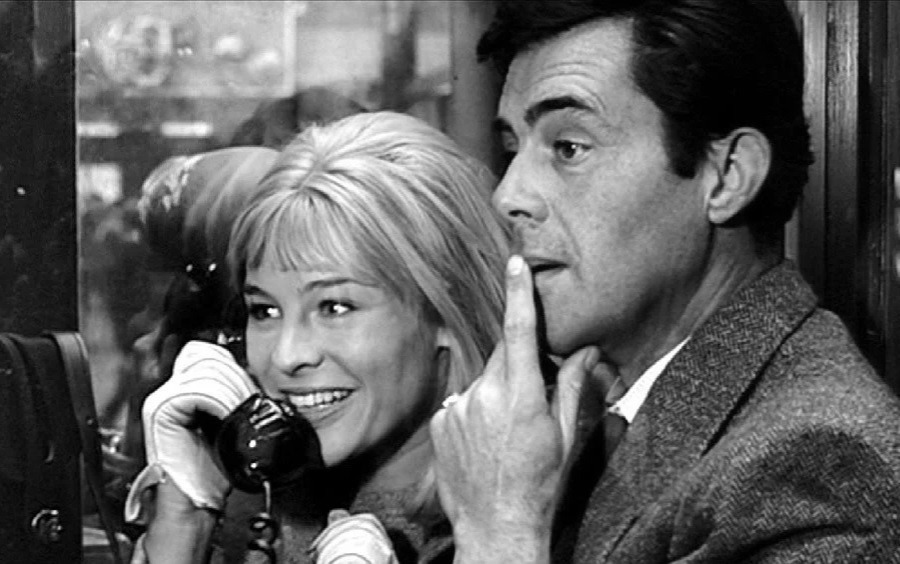
    Darling is an incisive and biting social satire of London’s jet set culture in the swinging sixties – so says the BFI’s information sheet, and who am I to argue with that. Made in 1965, directed by John Schlesinger from a script by novelist Frederick Raphael, a new 4K restoration was re-released in the UK last Friday to commemorate its sixtieth anniversary. As I happened to be in London for a few days, I wandered down to the South Bank on Friday morning and caught its first screening at the BFI. And what a treat it was!

    The film tells the story of Diana Scott, a young and beautiful model, played by Julie Christie in her first starring role. Easily bored and in a loveless marriage, we watch as she drifts in and out of a series of affairs in search of some kind of fulfilment. Her first extra-marital fling is with Robert Gold (Dirk Bogarde), a literary interviewer/director for BBC television. He leaves his wife and children, and they set up home together; but her excitement is short lived and pretty soon she has slipped off to Paris with Miles Brand (Laurence Harvey) a rather sleazy advertising executive. On discovering her infidelity, Robert kicks her out, but rather ironically, Miles casts her as the Happiness Girl in an advertising campaign for a chocolate company.

    The film is clever and funny: it carries you along on Diana’s journey, always loving the moment in public, always unfulfilled in private. This is a cynical take on the swinging sixties, highlighting the emptiness of the permissive society and the shallowness of the it-crowd. In many ways it is reminiscent of Fellini’s 1960 masterpiece, La Dolce Vita, but perhaps falls just a little short.

    Christie, Bogarde and Harvey were all excellent in their roles, with Christie picking up an Oscar and a string of other awards for her performance. Frederick Raphael also won an Oscar for the screenplay, and he and Schlesinger picked up a raft of other awards and nominations.

    Darling is something of a forgotten classic and if this new version is showing anywhere near you, I heartily recommend it!

  • My ‘Top 3 and a Bit’ films about Poets

    Here is my fifth list: my ‘Top 3 and a bit’ films about Poets.

    I feel the need to stress that this list is my favourite films about poets, rather than my favourite poets. When assessing films about real people, it is easy to fall into the trap of judging the film based on preconceptions, either in relation to ones opinion on the work or life of the subject, or even on the content of the film that one had expected to see.

    There is a huge difference between a biopic (i.e. a film dramatising the life of a particular person), and a film which takes a short period or event in a person’s life and dramatises that. Of the 18 films about specific poets that I have watched over the last couple of weeks, I found that the more rewarding films were those which concentrated on specific, often short, periods within the lives of their subjects; the more comprehensive life stories tended to be a little dry.

    In Andrew Motion’s biography of Philip Larkin, he recalls that Larkin used to say that he hurried through the early years in any biography because he doubted whether they had anything interesting to say about the life that was to follow. By and large, I am with him there.

    So, here are my Top 3 films about Poets, together with notes on several additional films which are certainly worthy of attention:

    (1)        And When Did You Last See Your Father? (2007 – Anand Tucker)

    The film is based on Blake Morrison’s 1993 memoir of the same name, and was adapted by David Nicholls. It explores Morrison (Colin Firth/Matthew Beard)’s rather difficult relationship with his father (Jim Broadbent). It is set over a matter of just a few weeks, when Morrison’s father lay dying, however much of the story is told in flashback, concentrating on his teenage years. Morrison is searching for some kind of confrontation with his father which might bring some closure, however his father’s ill health prevents any meaningful discussion. There are no easy answers in this film and very little is ultimately reconciled, but I rather liked that. The performances from the leads are excellent, as are those from the supporting cast, particularly Juliet Stevenson as Morrison’s mother and Gina McKee as his wife.     

    Incidentally, Blake Morrison was born in Skipton in North Yorkshire in 1950 and attended Ermysted’s Grammar School. My youngest son, also a poet, also born in Skipton, and who also attended Ermysted’s, is fifty years younger, to the month. So I guess I was bound to have a soft spot for this film. If you are interested in my son’s poetry, you can take a look at his blog by clicking here.

    (2)        Neruda (2016 – Pablo Larrain)

    In 1946, with the help of the communist party, Radical politician Gabriel González Videla became president of Chile. However, two years later he turned against the communists, banning the party and ordering mass arrests. Poet, diplomat, communist politician and Nobel Prize winner Pablo Neruda (Luis Gnecco) spoke out against the repression of his party, thus putting himself in danger. And so he was forced to go on the run, taking with him his wife Delia del Carril (Mercedes Morán). The film covers this period of 1948, with Neruda trying to escape to neighbouring Argentina, pursued by a dogged young policeman, Óscar Peluchonneau (Gael García Bernal). The events as I have described are true, however the character of the policeman is altered significantly in the film to provide an entertaining game of cat and mouse between him and the Nerudas. This makes for a very watchable film.

    (3)        The Edge of Love (2008 – John Maybury)

    Set during the London Blitz in the Second World War, Dylan Thomas (Matthew Rhys), runs into his childhood sweetheart Vera (Kiera Knightley). Old feelings are rekindled and once again Thomas and Vera become very close. However, Vera also becomes best friends with Thomas’s wife, Caitlin (Sienna Miller), and so the three develop an intense triangle, even to the point of sharing accommodation. An army officer, William Killick (Cillian Murphy), also falls for Vera and the couple marry. When Killick returns to active duty, the Thomases and Vera move to neighbouring cottages in a Welsh seaside town. However the proximity is too much for Thomas and he and Vera begin an affair. When Killick visits on leave, he hears rumours around the town about their relationship and tempers fray, with dramatic effect. The acting is excellent throughout and the concentration on this four-sided relationship make for a great film, although the poetry certainly takes a back foot.

    And the Honourable Mentions …

    The following films are those that came close to making my Top 3, but did not quite get there (the ’bit’), listed in alphabetical order:

    Benediction (2021 – Terence Davies)

    Benediction follows the life of Siegfried Sassoon (Jack Lowden/Peter Capaldi) from his committal to Craiglockhart Hospital in 1917 through to his death in 1967, at the age of eighty. The film concentrates on friendships and love affairs with, amongst others, Robbie Ross (Simon Russell Beale), Ivor Novello (Jeremy Irvine), Stephen Tennant (Calam Lynch/Anton Lesser), Glen Byam Shaw (Tom Blyth), and Wilfred Owen (Matthew Tennyson). Lowden’s portrayal of Sassoon was very sympathetic and highly watchable. We are not left with the impression that he had a particularly happy life, but in an age where it was illegal for him to simply be himself, that is understandable.

    Bright Star (2009 – Jane Campion)

    Bright Star focuses on the period 1818 to 1821, the last three years of the life of poet John Keats (Ben Whishaw) and his love affair with Fanny Brawne (Abbie Cornish). The film was based on Andrew Motion’s biography of Keats and Motion also served as a script consultant. Fanny was very ‘modern’ for the early nineteenth century; outgoing and flirtatious, it was she who pursued Keats, rather than the other way around. Their relationship was opposed by his best friend Charles Brown (Paul Schneider) but he was only able to watch as they slowly fell deeply in love. Unfortunately, he had tuberculosis, and nobody could prevent the gradual deterioration of his health. I found Campion’s film very affecting and was deeply moved by the two central performances.

    Children of the Century (2000 – Dian Kurys)

    This French Biographical drama is about the somewhat tempestuous relationship between poet Alfred de Musset (Benoît Magimel) and the novelist George Sand (Juliette Binoche). The film begins in 1831 when Sand walked out on her marriage and her children to live in Paris, to write novels, and to enjoy society. She embarked on her celebrated affair with de Musset in 1833 and the film is based on his autobiographical novel The Confession of a Child of the Century written shortly after the affair ended, in 1836. Their two-year affair was extremely intense and had a profound effect on their lives and their writings lasting long after the affair ended. Binoche and Magimel were romantically involved at the time the film was made.

    The Doors (1991 – Oliver Stone)

    This film tells the story of Jim Morrison (Val Kilmer) from 1965, when he was instrumental in forming the band The Doors through to his death, aged 27, in Paris in 1971. I enjoyed the film very much and I thought Val Kilmer was excellent as Morrison, however I did not actually like the character at all. Yes, he was fascinating and charismatic and a hugely talented lyricist, but he also came across as a self-obsessed drunken, drug-addicted slob. Having said that, the film is definitely worth watching, if only as a cautionary tale to show how talent and promise can so easily be wasted.

    Endless Poetry (2016 – Alejandro Jodorowsky)

    Endless Poetry is a surreal autobiographical film by Chilean poet and filmmaker Alejandro Jodorowsky. In the film, he is played byhis son, Adán Jodorowsky. The film tells the story of his life from the age of nine, when he moved with his Jewish family to Santiago, through to his emigration to France as a twenty-four-year-old, in 1953. The film sees his rejection of his Jewish heritage, his family and the life-plan they had laid out for him, in order to become an avant-garde poet. He becomes a central part of the Santiago ‘alternative’ art scene, and the film spends a lot of time exploring this world. I am not honestly equipped to say how good a film this is – I do not normally do surreal – however I was rather pleased that I followed the plot, and I enjoyed the experience.

    Howl (2010 – Paul Hyett)

    Howl is an American docudrama covering the 1957 obscenity trial relating to Allen Ginsberg (James Franco)’s poem Howl. The accused was not actually Ginsberg, but Lawrence Ferlinghetti (Andrew Rogers) another poet and the co-founder of City Lights Bookstore, who was the first person to publish Howl. The trial scenes, pitching Jack Ehrlich (Jon Hamm), Ferlinghetti’s defence attorney, against Ralph McIntosh (David Strathairn), the prosecuting counsel, are particularly effective. The film intersperses the trial scenes with a recreation of Ginsberg’s debut performance of Howl at an art gallery on Filmore Street in San Francisco in 1955, an event which became known as the Six Gallery Reading. Franco’s performance in this recreation is very powerful, and the film is extremely watchable.

    Kill Your Darlings (2013 – John Krokidas)

    Another film about Allen Ginsberg (Daniel Radcliffe), this time concentrating on his college days at New York’s Columbia University. Here he met several other significant members of the Beat Generation, including William S. Burroughs (Ben Foster), and Jack Kerouac (Jack Huston). However he also met and became close friends with Lucien Carr (Dane DeHaan), a very troubled young man who had strong anti-establishment tendencies and, ultimately, proved to be an extremely dangerous friend. Radcliffe is very strong in the main role and the chemistry between Radcliffe and DeHaan makes the film compelling viewing.

    Priest of Love (1981 – Christopher Miles)

    The Priest in question is poet, novelist and painter D H Lawrence (Ian McKellen), and the film tells the story of his marriage to Frieda Weekley, nee von Richtofen (Janet Suzman). It covers the period from the beginning of the Great War through to Lawrence’s death in 1930. The screenplay by Alan Plater is an adaptation of part of Harry T Moore’s biography of the same name. Lawrence and his wife felt persecuted by the British authorities, partly through the attacks on his literary output for obscenity, which led to the public burning of his novel The Rainbow, and partly because of her treatment as a German resident in Cornwall during the war. They travelled first to New Mexico, then on to Mexico, briefly back to England, and finally to Italy, where he wrote Lady Chatterley and lived out the remainder of his days. The film neatly balances the story of the marriage with the worlds of Lawrence, the writer, and Lawrence, the painter.

    Sylvia (2003 – Christine Jeffs)

    A film documenting the life of Sylvia Plath (Gwyneth Paltrow), from her arrival in Cambridge as a Fulbright Scholar in 1955 through to her death from suicide in 1963, aged just thirty. The centre of the film, of course, is her whirlwind romance with, and marriage in 1956 to, the poet Ted Hughes (Daniel Craig). What I particularly like about the film is that it doesn’t look to blame – it simply lays out the events: Plath’s suicide attempts prior to meeting Hughes; her jealousy of his success as a poet; her paranoia in relation to his sexual fidelity; his eventual infidelities; the consequent marriage break-up; and his getting another woman pregnant (how’s that for a whistle-stop tour). Paltrow and Craig are both excellent, as is Michael Gambon who plays her downstairs’ neighbour.

    And the rest…

    So, what else did I watch in compiling my list? The following films were also considered, but ultimately did not make the grade:

    • All is True (2018 – Kenneth Branagh) – least said the better – why Branagh did this worthy yet boring Shakespeare biography I do not understand.
    • Byron (2003 – Julian Farino) – Jonny Lee Miller’s Byron showed promise to begin with, but whilst he was definitely bad (shagging his sister and all that) I’ve known Chartered Accountants who were madder and more dangerous to know.
    • The Colour of Pomegranates (1969 – Sergei Parajanov) – arty film about the Armenian poet Sayat-Nova. No evident narrative – just a series of tableaux, so I know as little about him now as I did before I watched it.
    • The Laureate (2021 – William Nunez) – an oddly passionless film about Robert Graves – war hero and the male part of a menage-a-trois.
    • A Quiet Passion (2016 – Terence Davies) – I know Emily Dickenson had a fairly boring life but that is no excuse for making a boring film – if this had been any slower it would have ground to a halt.
    • So Long Marianne (2020 – Paul Wiffen) – none of the characters rang true to me – it was Leonard Cohen and his muse Marianne but without any depth of soul.

    I am sure I have missed loads of films on poets, so if you have any films you think I should watch or that may deserve a place in my ‘Top 3 and a Bit’ please let me know. I will endeavour to find them and watch them.

    After all this poetry, I need something a little more exciting, so my next list will be of films in the Erotic Thriller subgenre – primarily a throwback to the eighties and nineties, with a handful of earlier and later films thrown in.

  • REVIEW:  Hallow Road ★☆☆☆☆

    Hallow Road is a 2025 British horror/thriller drama, directed by British/Iranian filmmaker Babak Anvari. It had its world premiere at some Texan Film Festival that I had never heard of, and was released in the UK last Friday. I caught it this morning at the Everyman in Harrogate.

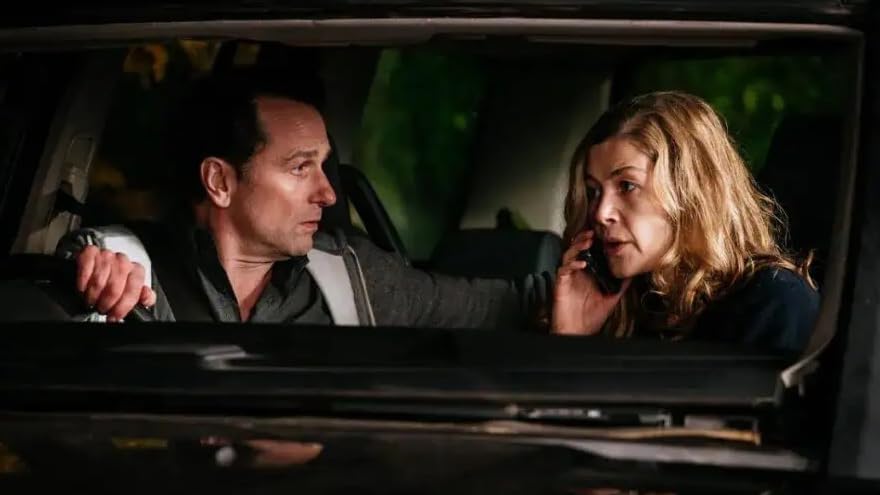
    The set-up to the film is that a married couple (Rosamund Pike and Matthew Rhys) have had an argument with their daughter who then took his car and stormed off into the night. At 2:00am she telephones in a hysterical state to say she has had an accident and knocked down a girl who ran out into the road. Don’t worry about spoilers – we learn all that in the first few minutes. The film is then virtually all set in Mum’s car as they drive out to rescue their distraught daughter, who we never see but only hear on the mobile phone, which is on speaker phone in the car for most of the film.

    Every parent’s worst nightmare, so all the blurb about this film seems to say. And as a parent, I get that. It is just that in those circumstances, that is not how one would react. Until it becomes a little supernatural towards the end, this is supposed to be realism. It is also in real time – you can tell that from the progress of the telephone calls and the satnav. However, given they had to get there desperately urgently in a life and death situation, why did he drive at considerably below the speed limit? There were no other cars on the road! And why did he stop at the red light for so long – just go through – at the risk of repetition, there are no other cars, and it is a life and death situation. I suppose going slow gave the parents more time to shout at each other and unfortunately that is what most of the film consisted of. Can I suggest, if you really want to calm your panicking teenager down, the best way is not to keep shouting at her over the phone with conflicting messages.

    I just could not bring myself to care about these people. As a parent, I get the horror of the situation – but these characters were simply not credible in that situation. When we finally get to the car in the spooky woods, and the plot becomes a bit other-dimensional, it was a case of too little – too late. I just wanted it all to have stopped by then – I had definitely not bought-in.

    Hallow Road was a very long eighty minutes – if he had broken the odd speed limit it could have been all over in sixty! I strongly recommend you do not bother!

  • REVIEW:  Good One ★★★★☆

    Good One is a 2024 American drama, the directorial debut of India Donaldson, who also wrote and produced the film. It had its world premiere at the 2024 Sundance Film Festival and was released in the UK yesterday. Since I was already at the Pictureville Cinema, Bradford for The Marching Band, it seemed churlish not to do the double-bill.

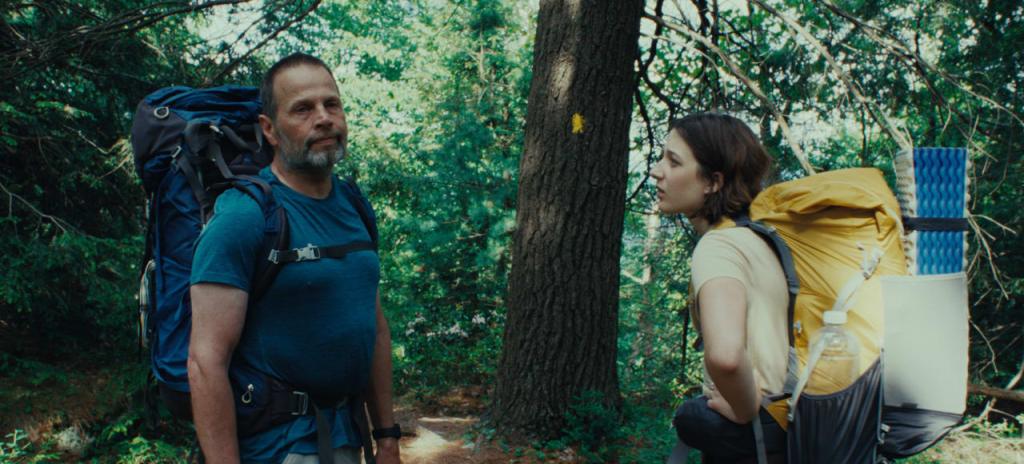
    The film follows a three-person hiking expedition to the Catskills, a vast mountainous forest park in Southeastern New York State. Lifelong fifty-something friends Chris (James Le Gros) and Matt (Danny McCarthy) had planned to take their respective teenage kids, Sam (Lily Colias) and Dylan on a hiking and camping weekend. However Dylan, resentful of his parent’s divorce, refuses to go. So 17-year-old Sam, her father and his best friend set out into the wild.

    Both Chris and Matt have failed marriages, and Matt has a failed acting career to go with it. They come across a bit like the Odd Couple: Chris the tidy, organised one who has camping down to a fine art and Matt the slob, who forgot his sleeping bag but not his booze. They are both resentful of where they now find themselves, and are both rather self-absorbed, particularly after a few drinks. They over-share with Sam, who is just setting out on her own life and does not need to hear all their self-pitying, middle-aged angst. She is the ‘good one’ of the title: a well-balanced teen excited about her future. When they ask for her opinions on their situations, they get an objective view, not the sympathy they were perhaps seeking. But there are some things that, once said, can never be unsaid.  

    This is a beautifully observed piece of film making. It is all about trusting the camera to pick up what is going on in the heads of the characters, so that they do not need to vocalise their responses to what they see and hear. And Sam’s face effortlessly depicts every thought and every moment of discomfort, humour, and shock – Lily Colias is a quite astonishing young actress!

    Consequently, there are no easy conclusions and no neat tidying away of loose ends. It is case of what you see is what you get. But it is clear that Sam walks out of the forest a different girl to the one who walked in three days earlier.

    Good One is an excellent small-scale drama: almost a chamber drama, but set in a vast National Park, and I strongly recommend it.

  • REVIEW:  The Marching Band ★★★★☆

    The Marching Band (En Fanfare) is a 2024 French drama directed by Emmanuel Courcol, who also co-wrote the screenplay. It premiered at the 2024 Cannes Film Festival and was released in the UK yesterday, so I went down to the Pictureville cinema at the National Media Museum in Bradford to take a look.

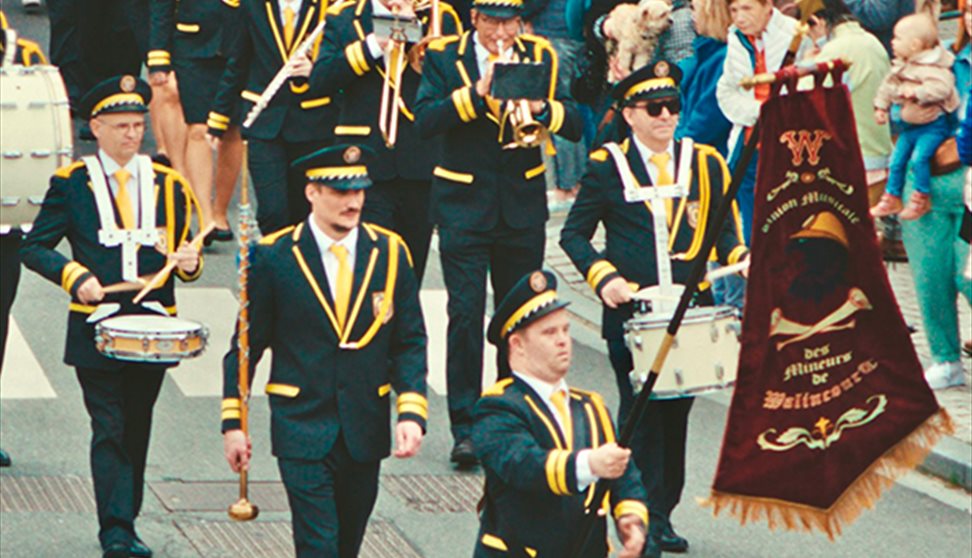
    When internationally renowned orchestra conductor, Thibaut (Benjamin Lavernhe), is diagnosed with leukaemia, a test to assess the suitability of his sister as a bone-marrow donor reveals that she is not in fact his real sister – he was adopted. Thibaut tracks down a biological brother, Jimmy (Pierre Lottin – who appeared recently in Ozon’s When Autumn Falls), who was also unaware that he had a brother. Jimmy is a cook in a factory canteen, and plays trombone in a local marching band. So, poles apart both socially and culturally, the brothers have one thing in common: music.

    Jimmy is tested and his bone-marrow proves a potential match and, when the band find themselves in need of a new conductor, guess who steps up to the plate! All the elements for this to be just another feelgood film, however the tightly written characters of the brothers, together with the excellent performances from the two leads and the deliberately unsentimental direction keep it from falling into that trap.

    This is firmly anchored in the genre of family drama. Yes, the music and the structure of the band have certain echoes of Nick Herman’s Brassed Off, but this film is much more focussed on the relationship between the brothers and what they each might have become had they grown up in the other’s place, or perhaps even together in one family.  

    The Marching Band is a little melodramatic in places, but is well-directed and the excellent performances from the two leads keep it very watchable. And whilst the film holds back on sentimentality until almost the end, the final scene is fabulous and will reduce most audiences to tears. I have no hesitation in recommending this film.

  • My Top 25 Films for Comfort Viewing

    So what do I mean by comfort viewing?

    Well, let’s start by defining comfort food: food that provides a nostalgic or sentimental value, usually associated with childhood or home cooking. And let’s add to that food that is really moreish and easy to eat, such as sour cream and chive Pringles, or Ben and Jerry’s cookie dough ice cream.

    And there in a nutshell is Comfort Viewing – films that have nostalgic or sentimental value, either because of their content, their place or because we know them so well they are ‘easy’ films to rewatch – they don’t require much effort from us.

    I have a lot of films on DVD that I watch over and over again, and someone suggested that I should make a list and include it as a blog post.

    So here is my Top 25, in alphabetic order:

    Annie Hall (1977 – Woody Allen)

    The romcom that broke all the rules (and the fourth wall). Very, very funny, even though I know all the jokes and can recite them with the film, which must be very annoying for anyone watching with me.

    Back to Burgundy (2017 – Cedric Klapisch)

    A charming film about three siblings reuniting after their father’s death, to decide how to carve up the family vineyard. I could happily spend a lot more time with these people.

    Bergman Island (2021 – Mia Hansen Love)

    A romantic drama about two filmmakers visiting the island of Fårö, partly as a pilgrimage to the home of Ingmar Bergman and partly as a working retreat. The film explores the cracks in their relationship but also presents the film she is writing as a separate romance – a film within a film.

    Certified Copy (2011 – Abbas Kiarostami)

    The film is set in Tuscany, where a successful British writer is shown around the area by a local antiques dealer. But their relationship undergoes a series of odd transformations over the course of a day, leaving one wondering just what is the reality of the situation.

    A Chorus of Disapproval (1989 – Michael Winner)

    An adaptation of Alan Ayckbourn’s hugely successful 1984 play about small-town corruption and the manipulation of innocence, set around an amateur production of John Gay’s The Beggar’s Opera. The critics didn’t like it, but I love it, perhaps because it shows so much of Scarborough, where I spent so many childhood holidays.

    Cinema Paradiso (1988 – Giuseppe Tornatore)

    A coming-of-age comedy drama about a successful filmmaker returning to his hometown in Sicily and reliving his childhood friendship with the aging projectionist who worked at the local cinema, from which he developed his lifelong love of film.

    Defence of the Realm (1985 – David Drury)

    A British cold-war political thriller about a teenager’s death, a state cover-up, and a young newspaper reporter determined to uncover what really happened, and then report it to the World.

    Fallen Leaves (2023 – Aki Kaurismäki)

    A romantic comedy about two lonely people struggling to get by on low paid work, who meet by chance in a karaoke bar and tentatively begin a relationship. This was my introduction to Kaurismäki’s off-the-wall style and I have since obtained and watched all of his earlier work. It is the most recent film on this list, and I have already watched it three or four times.

    The Celebration – Festen (1998 – Thomas Vinterberg)

    A Danish black comedy about a family gathering to celebrate their patriarch’s 60th birthday, during which the eldest son reveals a shocking family secret in his congratulatory speech. This was the first film of the Dogme 95 movement.

    The Fourth Protocol (1987 – John Mackenzie)

    Another British cold-war thriller, this time about nuclear weapons. The title refers to a clause in an agreement between east and west on restricting nuclear proliferation. It pitches Michael Caine against Pierce Brosnan.

    Gorky Park (1983 – Michael Apted)

    Dennis Potter’s adaptation of the novel by Martin Cruz Smith about the investigation into an incident which occurred in Moscow’s Gorky Park where three murder victims are discovered under strange circumstances.

    Hidden – Caché (2005 – Michael Haneke)

    A neo-noir psychological thriller about a middle-class French couple who are terrorised by anonymous tapes delivered to their front door, showing they are under surveillance. Clues in the videos suggest they relate to an incident in the husband’s childhood.

    In the House (2012 – Francois Ozon)

    A French comedy-drama about the relationship between a middle-aged literature teacher and one of his pupils, exploring the process of writing fiction by using real people to create the drama and the moral questions this imposes.

    Julieta (2016 – Pedro Almodóvar)

    A Spanish melodrama about the relationship between a mother and her estranged teenage daughter, inspired by three short stories by Alice Munro. The film pieces together the emotional history of their relationship, whilst retaining the angst that the estrangement has on Julieta, the mother, who cannot understand what came between them.

    Let the Sun Shine In (2017 – Clare Denis)

    A French romantic drama about a middle-aged, divorced, Parisian artist who is constantly looking for the right man, but instead has a series of unsatisfying relationships with the wrong ones. Juliette Binoche is excellent.

    Melinda and Melinda (2004 – Woody Allen)

    Four writers discuss whether life is essentially comic or tragic, then two of them proceed to tell a story, basically the same story, but one from the comic perspective and the other from the tragic.

    Moonlight in Paris (2011 – Woody Allen)

    The third Woody Allen on my list, a comedy fantasy film about an American writer, holidaying in Paris with his fiancée, who chances across a portal allowing him to travel back in time and meet his literary heroes. The experience leads him to question whether his fiancée is the right woman for him.

    Nora (2000 – Pat Murphy)

    The story of James Joyce and the love of his life Norah Barnacle from their meeting in Dublin, through their tempestuous relationship as an Irish emigrant couple in Italy. The film explores his writing, his drinking, their tempestuous sex life, their family life and his jealousy. I love all things Joycean, and watch this at least once a year, usually before setting off for Dublin.

    Paris, 13th District (2021 – Jacques Audiard)

    A French drama film containing several interlocking stories, loosely based on several comic short stories by US cartoonist Adrian Tomine. Each of the stories works in its own right, but weaved together skilfully by this master filmmaker, it is an intoxicating mix.

    Paterson (2016 – Jim Jarmusch)

    Already mentioned in my Blog post on films about poetry, this is the slow-burn story of a week in the life of a bus-driver poet called Paterson who lives in Paterson, New Jersey. We follow his daily life, going to work, coming home to dinner with his wife, walking the dog via a local bar, and all the time thinking and writing poetry. Wonderful film!

    Private Fears in Public Places (2007 – Alain Resnais)

    The second Ayckbourn adaptation on the list, this a French version of one of his darker plays, about loneliness and isolation. The setting has been moved from a small English town to Paris. Six disparate characters confront their emotional solitude as their lives intertwine.

    The Russia House (1990 – Fred Schepisi)

    The last of my cold-war thrillers, Tom Stoppard’s masterful adaptation of John le Carré’s spy novel. A British publisher, who is very active in the Soviet Union, becomes enmeshed in the story of a Russian Scientist who wishes to defect to the West. The CIA need his help to close the deal, but he has another, more romantic defection on his mind.

    Sex and Lucia (2001 – Julio Medem)

    A Spanish erotic drama film about a waitress named Lucia who falls in love with a writer named Lorenzo. However Lorenzo discovers he has a daughter from a casual sexual encounter several years earlier. The story moves backwards and forwards in time as it plays out, with tragic consequences.

    Summer with Monika (1952 – Ingmar Bergman)

    A Swedish romance film about a young working-class boy named Harry who meets and falls in love with an adventurous young woman named Monika. After a row with her drunken father, she leaves home and goes to Harry for help. They steal a boat and head off into the Stockholm Archipelago, where they spend an idyllic summer together.

    Tamara Drew (2010 – Stephen Frears)

    A British romantic comedy based on a comic strip and graphic novel by Posy Simmonds. The very lovely Tamara returns to her Dorset home after living in London, and sets the local men competing for her favours.

    So there you have it – 25 films which I watch when I feel the need for comfort viewing.

    Having prepared the list, I would be quite happy sitting down to watch any one of these films now. However, in preparing the list, I had to look through my DVD collection, and in doing so, found so many films that I also want to watch again, that I don’t have enough time.

    Not only that, but I still have seven films to watch before I can finalise my ‘Top 3 and a bit’ films about Poets, so that will take me a few more days.

    It is a hard life being retired!

  • REVIEW:  Parthenope    ★★★☆☆

    Paulo Sorrentino’s latest film, Parthenope (pronounced parth-en-o-pay), got its UK release yesterday. So with much excitement – I am a big fan of Sorrentino’s work – I set off to the Harrogate Everyman. There were only three of us in the cinema, although I guess that shouldn’t have been too much of a surprise at twelve noon.

    The film is extremely complex. If you like your plots to be straight-forward, or indeed understandable, then this is probably not for you. Like most Sorrentino films, both the cinematography and the soundscape are rich, stylish and beautiful, a real feast for the senses.

    So, the plot. Parthenope (Celeste Dalla Porta) is a stunningly beautiful woman from a well-off Neapolitan background, so beautiful in fact that when she enters a room, all heads turn. Her older brother is obsessed by her, almost to the point of incest; their childhood friend shares this obsession. However, regardless of the effect she has on everyone around her, she is rather cold and emotionally detached, unable to take pleasure from her exceptional beauty. Following a tragic incident, she refocuses on an academic career, achieving a high-level degree in anthropology at the University of Naples. Her professor (Silvio Orlando) is profoundly impressed by her intellectual brilliance, although we never really see anything which justifies that. As well as academe, she flirts with writing, acting and the church, however wherever she goes she sees disappointment and corruption: her favourite writer is John Cheever (Gary Oldman) who is filled with self-loathing; she meets two great actresses (Isabella Ferrari and Luisa Ranieri) who are both ridiculously arrogant and delusional; and the ‘miracle-working’ Bishop of San Gennaro (Peppe Lanzetta) is immoral and repulsive in equal measure. With Parthenope having opted for the academic life, the film then skips ahead some 40 years to her retirement. And that, basically, is the plot, or at least an outline of it.

    However, this is not a film about story; it is perhaps best described as a visual poem, full of symbolism and metaphor. To begin with Parthenope symbolises Naples itself. In fact, Parthenope was an ancient Greek settlement, the oldest Greek settlement on mainland Italy, which formed the basis for modern Naples. Parthenope was also one of the sirens in Greek mythology, hence Parthenope is a personification of beauty and, by extension, a metaphor for youth.

    And there we have Sorrentino’s preoccupations: Naples (his home city), youth and beauty.

    The film is certainly a love letter to Naples – I think it would be hard to watch it without longing to be there, hence, I suppose: ‘see Naples and die’. Whilst watching, it occurred to me that it was so visually stunning that at some stage I could rewatch the film without the subtitles, just to focus more on the pictures, allowing the Italian words to wash over me along with the wonderful music. However this is Naples warts-n-all: we also witness ugliness and corruption.

    But it is much deeper than that: it is also a contemplation of the nature of youth and old age, playing with the idea that if not exactly wasted on the young, then at least the true beauty of youth cannot be fully understood until life itself is almost extinct. She is asked by a man some fifty years her senior: “if I was forty years younger, would you marry me?” She responds: “that is the wrong question: the point is, if I was forty years older, would you still want to marry me?” This is basically Hegelian philosophy: youth being a transitional stage, a search for identity and understanding, a period of uncertainty before reaching the certainty which comes with age.

    As I said at the beginning, Parthenope is a complex film, working on many layers and not easily understood, certainly not from a single viewing. I found giving the film a star rating extremely difficult. I plumped for three stars, although I toyed with both two and four. And if you think that is a cop-out, wait until you read my recommendation:

    If you like Sorrentino’s work then this is a must see; if you like a good story, simply told, then maybe don’t bother!

  • My ‘Top 3 and a Bit’ films about Poetry

    Here is my fourth list: my ‘Top 3 and a bit’ films about Poetry.

    As with drink and alcoholism, I decided to divide this list into two parts, otherwise there would have been just too many films to watch and, in any case, there are two different classes of film: films about real poets, and films about poetry. So this is my lists of films about poetry and my next list will be films about real poets. Having said that, there is some crossover – so fictional stories about real poets (such as Shakespeare in Love) have been included in this list.

    I have watched/rewatched some 16 films on this subject in the last two weeks and, I am sorry to report, that along with some great films I have also seen some self-indulgent, pretentious rubbish! However, I guess that’s the way of things.

    So, here are my Top 3 films about Poetry, together with notes on several additional films which are certainly worthy of attention:

    (1)        Paterson (2016 – Jim Jarmusch)

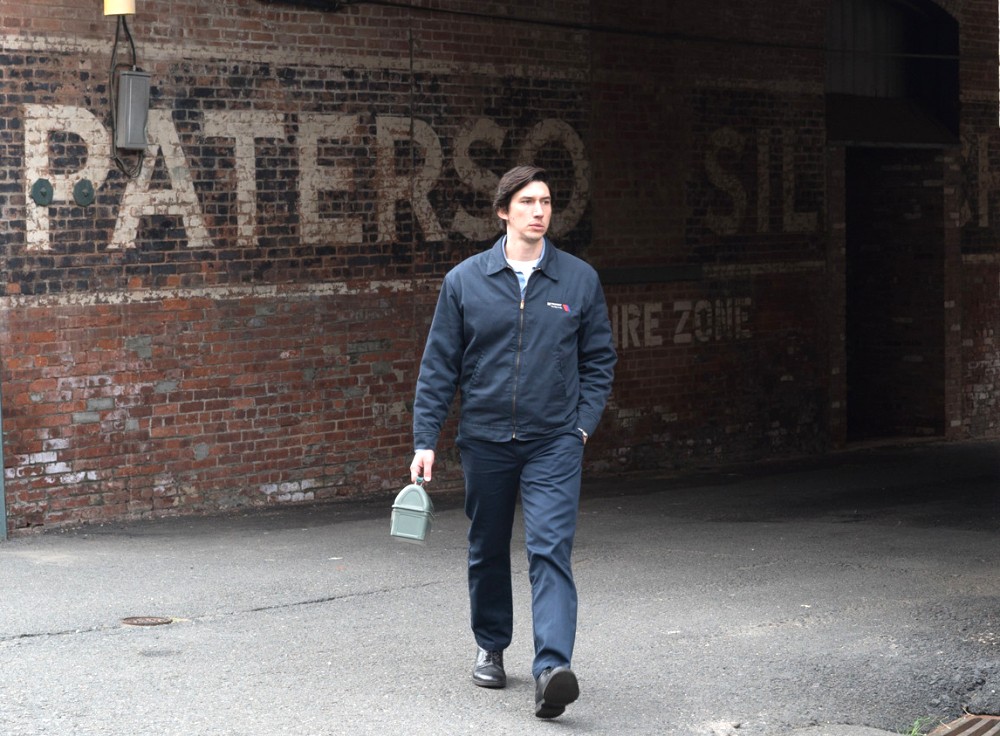
    Paterson (Adam Driver) is a bus driver in Paterson, New Jersey. We view a week in his life, watching his daily routine: he wakes shortly after 6:00 am next to his wife, Laura (Golshifteh Farahani); he eats his breakfast and walks to the bus depot; he drives his bus all day, stopping for lunch on the way; he walks home for his dinner; he takes their dog, Marvin, for a walk and stops off at a local bar for a drink; he goes to bed. With some subtle changes, we watch him do this from Monday to Friday. And all the time he thinks about and writes his poetry, which appears on the screen as it goes through his mind or as he writes it down. Laura, meanwhile, is not a creature of routine: her days are varied and rather wacky. The weekend brings surprises, but I would hate to spoil this magnificent slow-burn of a film by giving too much away here. Needless to say, Paterson is in the right place: Paterson NJ has a tradition of poetry – it was the home of William Carlos Williams and Alan Ginsberg. I watch this film every year or so and I never tire of it – it thoroughly deserves its number one spot in my list.

    (2)        Poetry (2010 – Lee Chang-Dong)

    A group of children playing by a riverbank watch the body of a teenage girl floating past. Mi-ja (Yoon Jeong-hee), a 66-year-old woman, is diagnosed with early-stage Alzheimer’s. As she leaves the hospital, she sees a distraught mother grieving the loss of her teenage daughter. On the way home, Mi Ja sees a poster for an adult literacy class on poetry: she has always dreamed of becoming a poet. She travels to the home of a well-to-do, elderly, male stroke victim, for whom she acts as carer and maid. Several hours later, she returns home to make dinner for her ill-mannered grandson, Jong-wook (Lee David), for whom she is responsible: his mother, her daughter, lives and works a long way away and they have not seen her for some time. And in a matter of a few minutes, all the key elements of Mi-ja’s deeply moving story are in place. The storytelling is at times very sad, at times beautiful, at times brutal. This is not an easy subject; however it is tackled in an utterly compelling and uncompromising manner. There is so much scope here for sentimentality: the Alzheimer’s, the stroke-victim, and the grandmother–grandson relationship; however, Lee Chang-Dong’s film never falls into that trap. We act as witnesses: the film never explains, and as such there is some ambiguity in the ending, which leaves one thinking about it long after it has finished. Mi-ja’s closing poem (the only poem she has written) is breath-taking. I have just discovered this film, and it is wonderful – find it and watch it!

    (3)        Il Postino (1994 – Michael Radford)

    Chilean poet Pablo Neruda (Philippe Noiret) is exiled with his wife for political reasons to a small Italian island. Hang on, I hear you say, he’s a real poet, so he is in the wrong list – not so: he may be a real poet, but this is an entirely fictional story. On the island, his post is delivered by a young, poorly educated and barely literate son of a fisherman, Mario Ruoppolo (Massimo Troisi). Slowly the two develop an unlikely friendship and discuss, naturally enough, poetry and the sea. When Mario falls in love with local waitress Beatrice Russo (Maria Grazia Cucinotta), he enlists the poet’s help to win his girl. This is a lovely, gentle, slow-burn about friendship and love. The film is in Italian, but directed by British director Michael Radford, with an astonishingly light touch, allowing the story to tell itself: nothing ever feels forced or out of place. The film won at least 28 awards (I lost count) including BAFTAs for Best Film Not in the English Language and Best Director. Sadly, Troisi was extremely ill during the making of the film, and died just before filming was complete.

    And the Honourable Mentions …

    The following films are those that came close to making my Top 3, but did not quite get there (the ’bit’), listed in alphabetical order:

    Black Mountain Poets (2015 – Jamie Adams)

    Lisa (Alice Lowe) and Clare (Dolly Wells), two sisters on the run after being interrupted by the police while trying to steal a JCB, go into hiding in deepest darkest Wales. Here they steal a car belonging to the Wilding Sisters, two poets on their way to a poetry retreat in the Black Mountains (so, nothing to do with the North Carolina postmodernist movement then!) In order to remain in hiding, they decide to ‘become’ these poet sisters. Then lots of silly things happen and it becomes totally unbelievable that they could possibly get away with this ludicrous impersonation. And so surely this belongs in the Also Ran section of my list… except, as the film goes on, the relationship between the sisters becomes more and more fascinating and their characters become more and more endearing, and I ended up really enjoying it! There is excellent support from Tom Cullen, playing Richard, the man they both fancy, and a wonderful comic turn from Rosa Robson as a published poet who is also part of the weekend retreat.

    Dead Poets Society (1989 – Peter Weir)

    John Keating (Robin Williams) returns to Welton Academy, which he attended as a teenager, to teach in the English department. He is one of those inspirational teachers we hear so much about: his rather unusual teaching methods inspire his class to strive to live life to the full (Carpe Diem and all that). As a result they revive the Dead Poets Society, of which, as a student, Keating had been a founder member. They meet after lights-out in an old Indian cave to recite poetry. However, as one might have guessed, things don’t turn out quite as planned. I may sound a little disparaging, but I honestly am not: I love this film and watch it every couple of years. Williams is excellent, as are the young cast of schoolboys (look out for Ethan Hawke as Todd Anderson). The film won a stack of awards, including a Best Film BAFTA, and an Oscar for Tom Schulman’s screenplay.

    Nostalgia (1983 – Andrei Tarkovsky)

    A Russian poet, Andrei Gorchakov (Oleg Yankovsky), travels to Italy in the footsteps of Pavel Sosnovsky, an 18th-century Russian composer, who lived for a while in Italy and, on return to Russia, committed suicide. His Italian translator Eugenia (Domiziana Giordano) is smitten with him, but he is not interested – his trip has made him nostalgic for his homeland. Amazing – just like I actually understood a Tarkovsky film! Having said that, it is not that difficult to keep up with, although it is rather heavy in symbolism. Apparently, this is a very personal piece for Tarkovsky, coming shortly after he left Russia in search of artistic freedom and found himself full of nostalgia for his homeland. Is it worth watching? Yes, absolutely. Is it about poetry? Well not really, no. So why is it in the list? It is about a poet and the symbolism and imagery make it relevant.

    Shakespeare in Love (1998 – John Madden)

    Again, before anyone tells me that Shakespeare was also a real poet, this is very much a work of fiction. It tells the story of the writing of, and first production of Romeo and Juliet, but not as it really happened. Here we see the story teased out from a creatively-blocked Shakespeare (Joseph Fiennes), as he falls in love with the fictional Viola de Lesseps (Gwyneth Paltrow). Unfortunately, she is engaged to be married to Lord Wessex (Colin Firth) who is not best pleased by her involvement with the theatre. There are a host of historical characters alongside Shakespeare, including Kit Marlowe (Rupert Everett), Queen Elizabeth 1 (Judy Dench) and Richard Burbage (Martin Clunes). The screenplay was originally written by Marc Norman, however the Bedford Falls Company who made the film brought in Tom Stoppard to help rewrite. Stoppard’s style, wit and clever playfulness are evident throughout the film, and to my mind, that is what makes it so special. It won a whole host of awards, including the Bast Picture Oscar, the Best Film BAFTA, and eight awards for the screenplay.

    Shun Li and the Poet (2012 – Andrea Segre)

    After working in a textile sweat-shop in Rome for many years to pay off her debt to human traffickers in order to bring her son to Italy, Chinese immigrant Shun Li (Zhao Tao) is suddenly transferred to Chioggia, a small fishing town near Venice. Here she works as a bartender in a small bar, owned by her Chinese ‘creditors’ but frequented by local fisherman, most of whom have been regulars for years. One of these customers is Bepi (Rade Šerbedžija), a fisherman of Slavic origin, nicknamed “the Poet”. Shun Li and Bepi embark on a friendship, fuelled by them both feeling lonely and isolated, as aliens in Chioggia. However, this friendship is disturbing for both the Chinese and Chioggian communities, and reluctantly they are forced to part. The film is gently paced, and the friendship between the protagonists builds gently and innocently. I had never come across this film before I googled films about poetry, and I whole-heartedly recommend it.

    Window Horses (2016 – Anne Marie Fleming)

    This is a Canadian animated film. I am not normally a massive fan of animated films, but this one is different: it is a very moving story, told very simply and very well. It is subtitled The Poetic Persian Epiphany of Rosie Ming. It tells the story of Rosie, a Canadian poet whose maternal grandparents were Chinese and whose father was Persian. She is invited to attend a poetry festival in Iran, where she meets other poets, including cultural ambassador Mehrnaz, Chinese poet Di Di, and German poet Dietmar. Rosie’s father, who had been a refugee from the current Iranian regime, had returned to Iran when Rosie was seven: Rosie has always considered this to be the abandonment of his family. Through Rosie’s interactions with the other poets at the festival, we learn quite a lot about poetry, and about retaining an open mind and not judging other people until you have all the facts. And, of course, we also learn the true story of what happened to her father. A very pleasant way to spend 85 minutes.

    And the rest…

    So, what else did I watch in compiling my list? The following films were also considered, but ultimately did not make the grade:

    • The Blood of a Poet (1930 – John Cocteau)
    • Orphee (1950 – John Cocteau)
    • The Testament of Orpheus (1960 – John Cocteau)

    I dutifully watched all three films in Cocteau’s ‘Orphic Trilogy’, however they were just not for me. I found them rather self-indulgent and unless you are a big Cocteau fan, in which case you will already know these films, I strongly recommend you do not put yourself through this.

    • A Chance Encounter (2022 – Alexander Jeffrey) – pedestrian, and ultimately the male character wasn’t very likeable.
    • Hurt by Paradise (2019 – Greta Bellamacina) – very pretentious and never credible.
    • Maya Dardel (2017 – Zachary Cotler & Magdalena Zyzak) – rather silly and not very credible, but Lena Olin was great in the title role. A fascinating interview technique!
    • Satan’s Brew (1976 – Rainer Werner Fassbinder) – as wacky and off the wall as one expects of Fassbinder, but it just didn’t work for me.

    I am sure I have missed loads of films on poetry, so if you have anything you think I should watch or that may deserve a place in my ‘Top 3 and a Bit’ please let me know. I will endeavour to find them and watch them.

    Having said that, I had intended watching Xavier Giannoli’s 2021 film Lost Illusions, but it just does not seem to be available to rent or buy in the UK. Apologies Xavier – if you are reading this, drop me a message and I will give you an address to send the screener!

    Next time it will be more on the biographical side – my Top 3 and a bit films about poets – real ones!