RICHARD’S BLOG

  • REVIEW: The Mastermind ★★★★☆

    The Mastermind is a 2025 American ‘slow cinema’ film, written and directed by Kelly Reichardt. It had its world premiere at the Cannes Film Festival in May, and was released in the UK on 24 October.

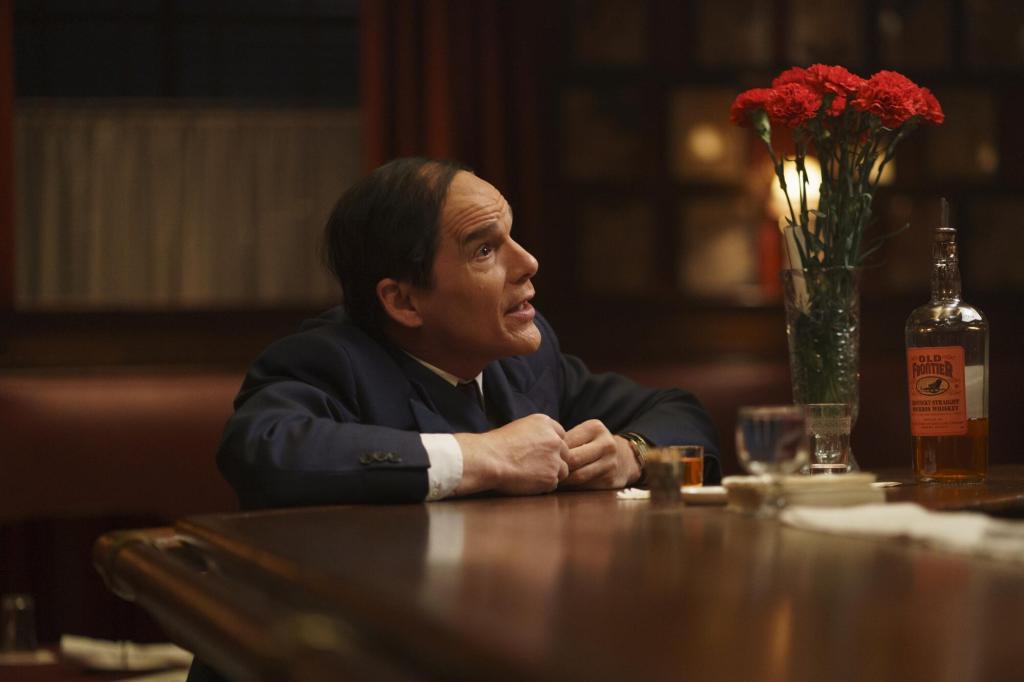
    The film is set in 1970, as the free-living experiment of the 1960s is coming to an end and America is still locked in deep unrest over the continuing Vietnam war. J.B. Mooney (Josh O’Connor) is an unemployed carpenter in Framingham, Massachusetts, son of, and one senses a bit of a disappointment to, a local judge. Whilst clearly not a criminal mastermind in the conventional sense, nevertheless he spends his time planning an art theft from the local public gallery. We watch as he ‘practices’ with the theft of a tiny figurine, presumably to assess the security systems, then plans in minute details the theft from the gallery of four abstract paintings by Arthur Dove, an early American abstract modernist. He then assembles a small gang to undertake the crime.

    You will notice that I have studiously avoided the word heist. This is because if you are the sort of person who goes to see ‘heist movies’, this is almost certainly not for you. The film has wooed the critics, currently holding a 92% approval rating on Rotten Tomatoes, and yet the RT audience reviews show a disappointing 38% approval. Why is this? Well, Kelly Reichardt is an advocate of ‘slow cinema’. Her Western film, Meek’s Cutoff, followed a group of settlers on the Oregon Trail and was a heartbreakingly realistic portrayal of how hard that journey must have been – but there were no wild hordes of red Indians firing arrows at gun-toting cowboys – it was not that sort of a Western. Similarly, The Mastermind follows JB through the planning and execution of the theft; the aftermath, when things do not go entirely according to plan; his betrayal and the loss of the paintings; and his flight from the forces of the law, having become a wanted man. It is about character, motive and detail. And even then we do not get any easy answers. I like to think his motive was to do something significant, to make his mark on Framingham, to prove his father wrong; however I could very easily be wrong. It might have been just for the money, but if so his choice of painting seems a little obscure – there were more valuable artworks available.

    So if you like heist movies with lots of car chases and bank vaults being blown open, do not go to see this – you will join the 62% of viewers who think it was way too slow. Conversely, if you like your cinema gently paced, real, intelligent and thought-provoking, I whole-heartedly recommend it.

  • REVIEW: After the Hunt ★☆☆☆☆

    After the Hunt is a 2025 American psychological thriller, directed by Luca Guadagnino and written by Nora Garrett. It had its world premiere at the Venice International Film Festival in August, was shown at the BFI London Film Festival and was released in the UK last Friday, 17 October.

    Yale University philosophy professor Alma Imhoff (Julia Roberts) is put in a difficult position when her apparently brilliant student, Maggie Resnick (Ayo Edebiri), claims that she was sexually assaulted by one of Alma’s peers, Hank Gibson (Andrew Garfield). So it is a ‘her word against his’ campus drama, in the manner of David Mamet’s Oleanna which so wowed theatre (and film) audiences back in the 1990s. And of course, in the post #metoo era, this has the potential to be a real hot potato.

    Now let’s add that Alma and Hank had a bit if a thing back-in-the-day; and that they are now in a battle over who will gain tenure in the philosophy department; and that Maggie is a lesbian who has a crush on Alma; and that Maggie is actually not quite so brilliant – she probably plagiarised her dissertation; and that Maggie is the daughter of a major donor to the University; and that Alma has some significant stomach complaint; and that Maggie is black, and is having a relationship with someone non-binary.

    If anyone can think of a potential issue that is missing from the above, it is probably in the film, but I just missed it from my list. Yes, this is a totally unfocused, confusing mess. Whilst Julia Roberts and Andrew Garfield do their best with the material they have, there is only so much a good actor can do for a bum script.

    And the real issue is that the characters, as written, are all incredibly difficult to like. I just would not want to spend any time with any of them. Two hours into this 139-minute film, I quite honestly could not have cared any less about whether Alma had stage IV colon cancer or irritable bowel syndrome! And nor did I care whether Hank raped Maggie or whether Maggie lied. And that is terrible – how can a film about such a personal and devastating act leave the viewer so completely cold.

    I strongly recommend that you do not bother with this mess of a film – far from a hot potato, it turns out to be warmed-over Cadbury’s Smash (if you don’t get the reference, google it)! It is definitely not worth either your time or your money.

    And incidentally, if Andrew Garfield’s table manners are anything like his character’s, then if he invites you out for a curry, just say no!

  • LONDON FILM FESTIVAL 2025

    I have just spent a very enjoyable five days at the London Film Festival, where I saw fifteen films (and slotted in a piece of theatre too).

    The overall standard of the films was very high, and I would happily recommend ten of them, however, as one expects when seeing so much, there were one or two duds as well.

    I will post the full reviews of what I saw when the films get their UK releases, however here is a whistlestop tour of what you should be looking out for and what you should take great pains to avoid:

    For me the film of the festival, deserving a 5* rating was:

    & Sons, by Argentinian director Pablo Trapero, performed in English with Bill Nighy leading a terrific ensemble cast.

    There were seven films worthy of 4* ratings (listed here in the order in which I saw them):

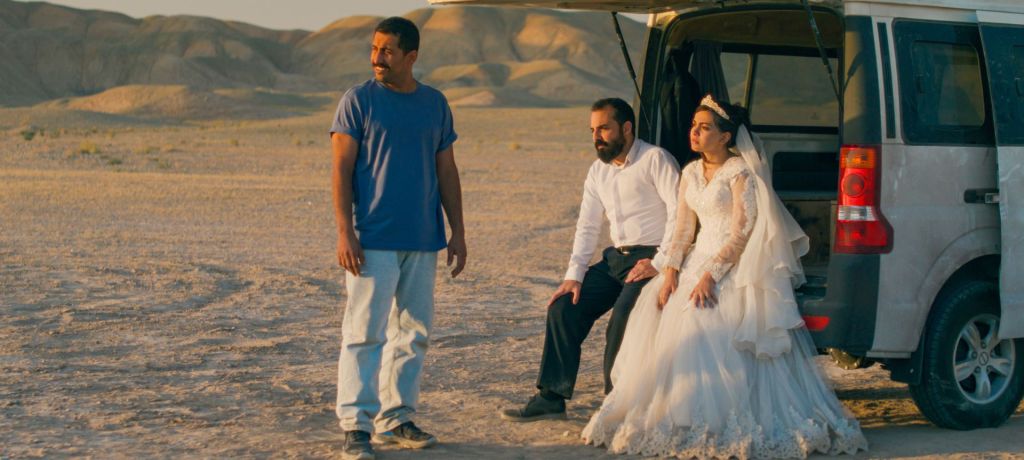
    It was just an Accident – Jafar Panahi’s Palm d’Or winner, somehow blending almost slapstick humour with a devastating indictment of state-sponsored torture in Iran;

    No Other Choice – Park Chan Wook’s hilarious satire on the world of employment, set in the paper industry, as I was for the last 23 years;

    Orphan – László Nemes’ heartrending story of a Hungarian child’s search for his father, from the end of the second world war to the late 1950s;

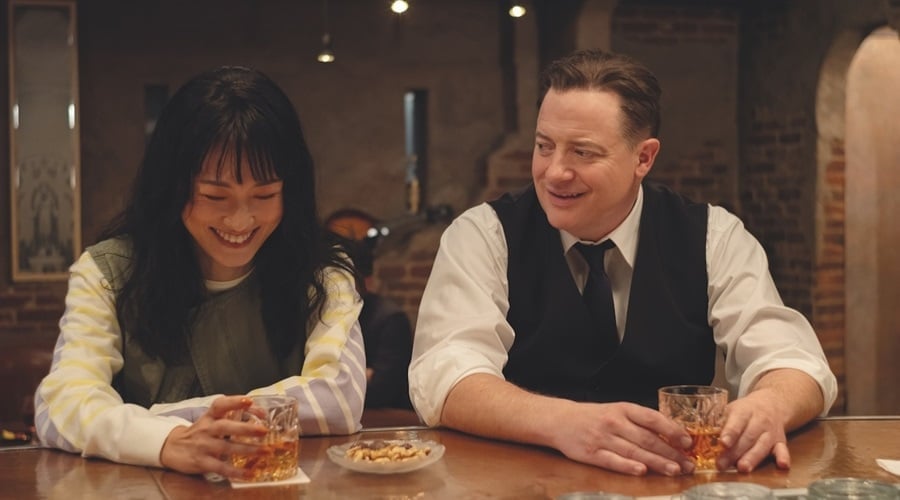
    Rental Family – Hikari’s rich and heartwarming tale of the need to find real connections in an increasingly commoditised world;

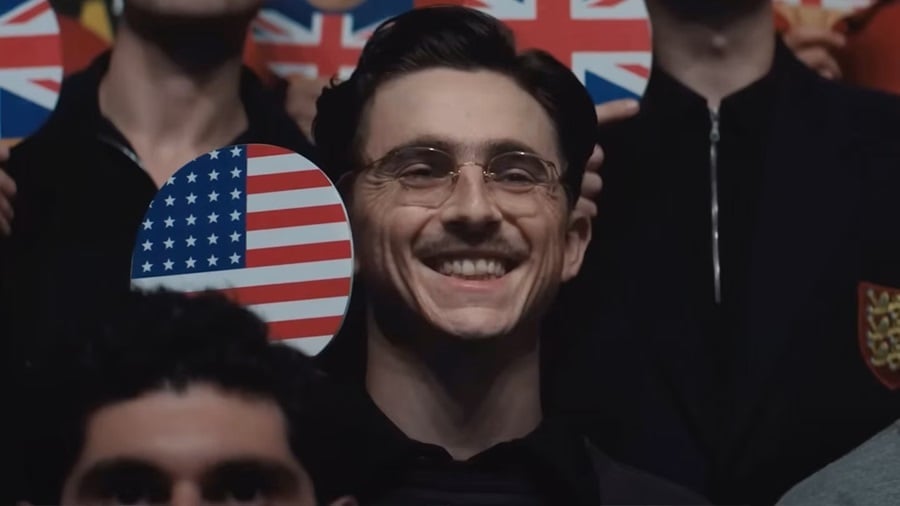
    Nouvelle Vague – Richard Linklater’s homage to the French new wave, and in particular to Jean-Luc Godard;

    The Stranger – François Ozon’s adaptation of Albert Camus’s classic novel L’Étranger.

    La Grazia – A return to form for Paulo Sorrentino, united with Toni Servillo, who plays a president in the final months of his tenure.

    Not quite as good as these, but certainly worth a look, were two films worth 3 ½ * – that is cheating, I know, but 3 didn’t seem quite enough!

    Blue Moon – Richard Linklater’s portrait of one day (in fact one evening) in the life of Lorenz Hart, following the termination of his musical partnership with Richard Rogers;

    Father Mother Sister Brother – Jim Jarmusch’s take on family relationships, consisting of three short films under one umbrella title.

    And finally, the five that disappointed me, the first four worth just 2*:

    Silent Friend – Ildikó Enyedi’s story of a tree(!);

    The Souffleur – Gastón Solnicki’s story of a hotel;

    The Fence – Clare Denis’s adaptation of a stage play by Bernard-Marie Koltès;

    Lady – Samuel Abraham’s mockumentary about the growing irrelevance of the upper classes;

    And finally, with 1 (begrudged) *:

    After the Hunt – Luca Guadagnino overly-complex campus drama – the worst film of the week, and now out at the cinema, so I will post a full review in the next few days.

    So London is done for another year – though many of these powerful films will stay in my mind for quite some time to come.

  • REVIEW: Urchin   ★★★★☆

    Urchin is a 2025 British drama film, written and directed by Harris Dickinson, in his directorial feature debut. It had its world premiere at the Cannes Film Festival in May, and was released in the UK on 3 October.

    Mike (Frank Dillane) is a young homeless man in London, struggling with addiction and poverty after five years on the streets. On the morning we meet him, he discovers that his wallet has been stolen by his friend Nathan (Harris Dickinson), another homeless man, and they fight. The fight is broken up by Simon, a passer-by, who doesn’t just pass by. He allows Nathan to escape with Mike’s money, but offers to buy Mike a (soft) drink and something to eat. When the opportunity arises, Mike assaults Simon and steals his wallet and his watch. However, it is all captured on CCTV: he is arrested and sentenced to fourteen months in prison. And that is the first five minutes of the film.

    Seven months later, Mike is released. He is provided with accommodation, finds himself a job and even gets a girlfriend, Andrea (Megan Northam). However, after seven months sober, he agrees to a restorative justice meeting with his victim, Simon, and this leads to his return to drugs and his life descends into what we assume is its usual downward spiral.

    This is a film about mental illness and those who fall between the cracks of our welfare systems. While Mike’s choices are generally despicable and he is utterly self-absorbed and unrepentant, Dillane’s performance makes him rather difficult not to like. And for me this was the beauty of the film. There were no easy answers, no purely good guys or bad guys, and absolutely no preachy speeches. It was Dardenne-like in its objectivity – show don’t tell. I tried hard not to judge Mike, and yet I found myself judging him all the time, however I was constantly aware that I was doing this from a position of privilege.

    I doubt anyone actually enjoys this film, in the usual sense of the word, however it is an important film, and it stays with you for a long time after the closing credits. It is an excellent central performance from Dillane and an assured directorial feature debut from 29-year-old Harris Dickinson. My only criticism is that there are a number of unexplained black and white flashbacks and a strange ending, all of which are happening in Mike’s head, which to me felt out of place.

    That said, I have no hesitation in recommending Urchin: it is an intelligent and thought-provoking film.

  • REVIEW: Dead of Winter ★★★☆☆

    Dead of Winter is a 2025 action thriller, directed by Brian Kirk from an original screenplay by Nicholas Jacobson-Larson and Dalton Leeb. It had its world premiere at the 78th Locarno Film Festival on August 8, 2025, before its cinema release on September 26. For the avoidance of doubt, it is not a remake of the 1987 film of the same name.

    For a number of reasons, Dead of Winter is almost certain to be likened to the Coen Brothers film Fargo: it is set in Minnesota, as was much of Fargo; in both films, there is a lot of snow and there are a lot of panoramic-shots of desolate frozen landscapes; both plots hinge around kidnappings; both ‘heroines’ are unlikely, but resourceful and plucky woman; and both contain an awful lot of blood. In fact, the two films taken together put me in mind of the central premise of Woody Allen’s Melinda and Melinda: all stories can be told either as tragedy or comedy. Fargo is the comedy; Dead of Winter has few laughs!

    So, the premise: Barb (Emma Thompson) sets out (in a blizzard) to Lake Hilda in northern Minnesota, apparently to go ice fishing. It quickly becomes apparent that this was where she and her husband spent their first date. Lost in the snow, she asks a strange guy for directions. Shortly thereafter she discovers that he has kidnapped a young woman. Then his weird wife shows up, and the film twists this way and that as Barb sets about rescuing the kidnapped girl.

    The plot is a little far-fetched, although I did manage to just-about suspend my disbelief until the end, and the plot twists are reasonably compelling. However, the characterisation is wafer thin. Ignoring Barb for a moment, the two kidnappers are one-dimensional – they have their motivation for what they are doing, and that is it; the kidnap-victim is even less fleshed out – all we really learn is why she was chosen; and there are two further characters, who don’t even have the luxury of one dimension!

    So back to Barb. Yes, we get an idea of who she is and why she has ventured into this frozen wasteland. Yes, ultimately there is a ‘completeness’ to her story (much of which is told in flashbacks of her with her husband). And yes, Emma Thompson is very good in the role. But for me, that was not quite enough.

    This is all plot and no depth of character. If you like twisty thrillers and action movies, and if you are happy to know next-to-nothing about the characters other than their primary motivation at this moment in their lives, then Dead of Winter is for you. However, like the landscape, it left me rather cold.

    Interestingly, much of the film was shot in Finland where apparently Emma Thompson has become something of a national hero, so perhaps we will see her in the next Aki Kaurismäki film!

  • REVIEW: The Ice Storm ★★★★☆

    The Ice Storm is a 1997 American independent comedy-drama, directed by Ang Lee and written by James Schamus, adapted from Rick Moody’s novel of the same name. It has just been re-released, and I managed to catch it last Friday at the BFI on the Southbank.

    The Ice Storm is set in the small town of New Canaan, Connecticut, in 1973, where very little happens on the surface, but scratch just a little below, and the inhabitants are wallowing in the aftermath of the swinging sixties, which had somehow passed them by. We eavesdrop on the lives of two families, the Hoods and the Carvers, friends and neighbours and sometimes a little bit more than that. The Watergate scandal reaches its dramatic conclusion; Thanksgiving approaches; and an ice storm is stirring. The grown-ups try to lose themselves in joyless hedonism (including a hilarious ‘key party’) while their children emulate their behaviour in their own ways. This is a snapshot of a world undergoing a radical change in moral attitudes, particularly with regard to sex and drugs. Whilst it is hilarious at times, it is also a devastating portrait of family life in small-town America that is all-too relevant in the current climate of questionable moral values.

    Ang Lee captures the spirit of the age perfectly and the ensemble cast, which includes Sigourney Weaver, Kevin Kline, and an eighteen-year-old Elijah Wood (in his thirteenth full-length picture) all put in tremendous performances, but it is the seventeen-year-old Christina Ricci (also in her thirteenth film) who steals the show for me. I saw her recently in Woody Allen’s Anything Else, and she was terrific in that too.

    The Ice Storm is a really funny film, and if, like me, you missed the swinging sixties, it will show you why that was probably no bad thing. If you get the chance to catch this in the cinema, jump at it.

  • REVIEW: Steve   ★★★★☆

    Steve is a 2025 drama film directed by Tim Mielants and written by Max Porter, based on his 2023 novella Shy. It had its world premiere at the 2025 Toronto International Film Festival, and was released in selected UK cinemas (and in the United States) on 19 September 2025. It will be streamed on Netflix on Friday (3 October), which I think is a bit of a shame – it is an intense viewing experience and is therefore best watched on a big screen free of the myriad distractions of watching at home on a television.

    The title character, Steve (Cillian Murphy, who Mielants also recently directed in the rather wonderful Small Things Like These) is the headteacher in charge of a residential school for boys with severe behavioural difficulties, so severe in fact that the school’s nickname is Last Chance. It is Steve’s job, with the help of his staff of five, which includes Amanda (Tracey Ullman) and Jenny (Emily Watson), to care for their small group of delinquent teenage boys, I think nine in total, one of whom is Shy (Jay Lycurgo). If you are thinking: that shouldn’t be difficult – six staff to nine pupils – think again – these kids are very, very wild indeed; and it doesn’t help that Steve has his own alcohol and substance abuse problem.

    The action takes place in one 24-hour period during which the school is to be featured in a social-interest segment of a regional TV news programme, and so there is a camera crew present. Add to that a visit from the local authority to discuss the ongoing feasibility (or not) of the school and a visit from the local MP (Roger Allam, brilliant, as ever) who sees the film crew as a photo opportunity, and this is a pressure cooker set to blow.

    Steve is as fast and furious as Small Things Like these was slow and gently understated; Murphy is excellent, as are the entire supporting cast – there are simply no weak links.

    I think it is important to note that Steve is a film based on the novel Shy, rather than an adaptation of the novel. The novel takes place in the chaotic head of Shy, one of the boys, over a couple of hours in the early morning. This period is towards the end of the film. I had not read the novel prior to seeing the film, however I don’t think that matters – I have read it since and greatly enjoyed it, although I suspect that prior to seeing the film, the style of the novel might have irritated me. The film, with Steve as the central character seems almost incidental to the novel, but the two together form one complete piece of art – they do not tell the same story, but they dovetail perfectly.

    Steve is an excellent film, and whilst you could wait for Netflix, I think the cinema will prove a much more rewarding experience.

  • My ‘Top 3 and a Bit’ Directorial Debuts

    It has been over a month since my last Top 3 and a bit post, so I felt a new instalment was overdue. I have recently reviewed several directorial debuts, including Anthony Schatteman’s Young Hearts and Urška Djukić’s Little Trouble Girls, which started me thinking about the best ever debut films. With a little research I came up with a list of quite remarkable films, several of which were not only the debut film of a particular director, but also their best film and, in the case of the overall top of the list, arguably the best film anyone has ever made.

    So, here are my Top 3 Directorial Debuts, together with notes on a number of additional films which are worthy of attention:

    (1)          Citizen Kane (1941 – Orson Welles)

    Citizen Kane is regularly cited as the greatest film ever made, and I have a lot of sympathy with that opinion – it is certainly the greatest directorial debut. It is a fictional biography examining the life and legacy of Charles Foster Kane (Orson Welles), a character based on several American tycoons, including most notably William Randolph Hearst. It begins with Kane’s death and his last words, or word, Rosebud. Kane’s death becomes a news sensation, and a reporter, Jerry Thompson (William Alland) is tasked with discovering the meaning behind Rosebud. He interviews Kane’s loves, friends and associates in a bid to discover the answer, and through these interviews we hear Kane’s life story. The filmmaking included many new and innovative techniques. One of my favourite sections is the breakdown of Kane’s first marriage, told as a montage of breakfast scenes spread over a number of years. The film won several Best Film Awards and was voted the Village Voice Film of the Century; however it missed out on the Oscar, which was won by How Green was My Valley!

    (2)          The 400 Blows (1959 – François Truffaut)

    One of several contenders for the first film of the Nouvelle Vague, The 400 Blows (Les quatre cents coups) is Truffaut’s masterpiece. Whilst I love his films (and indeed have them all on DVD), for me his later work never quite matched this debut film. It tells the story of rebellious teenager Antoine Doinel (Jean-Pierre Léaud), and is based loosely on Truffaut’s own adolescence. Growing up in Paris, misunderstood by his parents (Albert Rémy and Claire Maurier) for playing truant and for stealing, and punished by his teacher (Guy Declombe) for his poor discipline, he frequently runs away from both home and school. As well as a most entertaining coming-of-age story, the film is an exposé of the injustices of the treatment of juvenile offenders in France at the time. It is the first in a series of five films in which Léaud plays the role of Doinel, spread across the following 20 years. The 400 Blows was nominated for the Palm D’Or and won Truffaut the Best Director Award at Cannes.

    (3)          12 Angry Men (1957 – Sidney Lumet)

    12 Angry Men is a courtroom melodrama, adapted by Reginald Rose from his earlier teleplay. The film is a somewhat damning critique of the American jury system during the lynch-mob hysteria of the McCarthy era. It tells the story of a jury of twelve men as they deliberate the conviction (on the basis of reasonable doubt) or acquittal of a teenager charged with murder. Juror No 8 (Henry Fonda) prevents the jury returning a quick guilty verdict and effectively forces them to examine the evidence. Disagreement and conflict among the jurors pushes them to question their own morals and values: we find out as much about the other jurors as we do about the crime. The cast of jurors, which includes Lee J Cobb, Jack Klugman and Ed Begley, is excellent. The film is generally viewed as a classic, highly regarded from both a critical and a popular standpoint: it holds a 100% rating on Rotten Tomatoes. The film has spawned a great many remakes and parodies, including episodes of Hancock’s Half Hour, The Odd Couple and Family Guy.

    And the Contenders…

    The following films are those that came very close to making my Top 3, but did not quite get there (the ‘bit’), listed in alphabetical order:

    American Beauty (1999 – Sam Mendes)

    Lester Burnham (Keving Spacey) is an advertising executive having a midlife crisis. He becomes infatuated with Angela (Mina Suvari), his teenage daughter’s best friend. Meanwhile, his materialistic wife (Annette Benning) is indulging in her own extra-marital activities. This is a film which defies simple classification. It is about: the emptiness of a loveless marriage; coming to terms with growing older; repressed homosexuality; life in small town America; and a host of other themes. It is also a celebration of beauty. It won five Oscars, including Best Picture, along with Best Director for Mendes and Best Actor for Spacey.

    Breathless (1960 – Jean-Luc Godard)

    Michel (Jean-Paul Belmondo) is a low-level criminal who has committed a high stakes crime. Returning to Paris, he seeks out his American girlfriend Patricia (Jean Seberg) and tries to convince her to run away with him to Italy. Whilst she is drawn to his energy, she is repelled by his unpredictability and criminality. Together they try to evade the police as they race through the streets of Paris. Along with The 400 Blows and Hiroshima mon amour, it brought international attention to the Nouvelle Vague, in addition to establishing Godard as an important force in sixties filmmaking.

    Ivan’s Childhood (1962 – Andrei Tarkovsky)

    The film details the World War II experiences of Ivan Bondarev (Nikolai Burlyayev), a 12-year-old war-orphan whose parents were killed by the invading German forces. It examines the human cost of war and does not glorify it in the way many Soviet films did prior to the Khrushchev era. It balances the horrors of warfare by focusing on nature, both in the depiction of Ivan’s dreams, and as visual poetry, adding a layer of artistic elegance to the film. It is one of the most accessible of Tarkovsky’s films, and was both critically and commercially successful. It won the Golden Lion at Venice and was nominated for the Best Foreign Language Oscar, missing out to Fellini’s .

    The Lives of Others (2006 – Florian Henckel von Donnersmarck)

    Stasi agent Gerd Wiesler (Ulrich Mühe) is ordered by his friend and superior, Lt. Col. Anton Grubitz (Ulrich Tukur), to spy on playwright Georg Dreyman (Sebastian Koch), whose pro-communist politics and international recognition have previously protected him from state-monitoring. As Wiesler’s surveillance activities progress, he develops a strangely sympathetic attitude towards his subjects, which inadvertently leads them to tragedy. Unlike more traditional spy films, The Lives of Others is strongly character-led (as opposed to plot-led) and is built around the hidden thoughts and secret desires of the key players. The film won countless awards, including the International Feature Oscar and the BAFTA for films not in the English Language.

    The Lunchbox (2013 – Ritesh Batra)

    The Lunchbox tells the story of Ila (Nimrat Kaur), a young housewife, who is seeking to bring some romance back into her marriage by cooking delicious lunches for her wayward husband. However, after a mix-up in the complex lunch delivery system in Mumbai (the dabbawalas), Ila’s lunch is delivered in error to Saajan (Irrfan Khan), a middle-aged accountant approaching retirement. Each day, the error is repeated. Ila and Saajan begin to correspond through little notes passed via the lunchbox and gradually develop a friendship. This is a beautiful, sad story told through the care she puts into preparing the lunches and the tenderness he puts into his notes. The film garnered Batra numerous awards, both for his screenplay and for his direction.

    The Maltese Falcon (1941 – John Huston)

    A film noir classic – private detective Sam Spade (Humphrey Bogart) gets more than he bargains for when he takes a case brought to him by the beautiful but secretive Miss Wonderley (Mary Astor). As soon as she shows up, trouble follows: Spade’s partner is murdered, and Sam is accosted by Joel Cairo (Peter Lorre) who in turn leads him to Kasper Gutman (Sydney Greenstreet), all demanding with menaces the location of a valuable statuette. Entangled in a dangerous web of crime and intrigue, Sam soon realizes he must find the one thing they all want: the bejewelled Maltese falcon. Variety Magazine described it as one of the best examples of suspenseful melodramatic story telling in cinematic form. It won the Best Picture Oscar and is regularly included in Best Ever Film polls.

    Pather Panchali (1955 – Satyajit Ray)

    The first instalment of The Apu Trilogy, the film depicts the childhood joys and hardships of young Apu (Subir Banerjee) and his elder sister Durga (Runki Banerjee / Uma Dasgupta) amid the harsh realities of rural poverty in 1910’s Bengal. Together, they share life’s simple joys: sitting quietly under a tree; viewing pictures in a travelling vendor’s bioscope; running after the ‘candy man’ who passes through; and watching a jatra (folk play) performed by a visiting acting troupe. But the lack of food and severe conditions are always evident. This is a very gentle and profoundly moving portrait of triumph against adversity. Originally poorly received in his homeland, Pather Panchali has gradually been reassessed, and is now considered one of the finest films ever made.

    This Sporting Life (1963 – Lindsay Anderson)

    Frank Machin (Richard Harris), a bitter young Yorkshire coal miner, believes that life has more to offer him. Observing how the local rugby league team are lauded at a local night club, he sets out to join them, enlisting the help of aging club scout “Dad” Johnson (William Hartnell). Becoming one of their stars, he set out to bring some happiness into the life of his recently widowed landlady, Margaret Hammond (Rachel Roberts). Initially she rebuffs his attempts to court her and treats him rudely and abrasively, but eventually she falls for his charms. One of the classic ‘kitchen sink’ films, This Sporting Life was praised for its gutsy vitality, and particularly for Anderson’s direction: he “brings the keen, observant eye of a documentary man to many vivid episodes, without sacrificing the story line”.

    And the rest…

    The following are all great films in their own right, but didn’t come quite close enough to my Top 3. There are too many for me to provide detailed notes on each film, however I strongly recommend each and every one of them – they are not just fine films, but they are also great introductions to some of the finest directors in cinema history. They are listed in alphabetical order:

    Amores perros (2000 – Alejandro González Iñárritu)

    Being John Malkovich (1999 – Spike Jonze)

    Boyz n the Hood (1991 – John Singleton)

    Chariots of Fire (1981 – Hugh Hudson)

    Elevator to the Gallows (1958 – Louis Malle)

    Hiroshima Mon Amour (1959 – Alain Resnais)

    In Bruges (2008 – Martin McDonagh)

    Past Lives (2023 – Celine Song)

    La Pointe Courte (1954 – Agnes Varda)

    Lady Bird (2017 – Greta Gerwig)

    The Night of the Hunter (1955 – Charles Laughton)

    Ossessione (1943 – Luchino Visconti)

    Room at the Top (1959 – Jack Clayton)

    Saturday Night and Sunday Morning (1960 – Karel Reisz)

    Terms of Endearment (1983 – James L. Brooks)

    Who’s Afraid of Virginia Woolf? (1966 – Mike Nichols)

    I am sure I have missed some great debut films. If you know of any which you really think I have to watch (i.e. that may deserve a place in my ‘Top 3 and a Bit’), please let me know. I will endeavour to find them and watch them.

  • REVIEW: Caught Stealing ★☆☆☆☆

    Caught Stealing is a 2025 American dark comedy crime thriller film, apparently (but I will come back to the apparently shortly). It was directed by Darren Aronofsky from a screenplay by Charlie Huston, based on his own novel. It had its world premiere on August 7, in some cinema in Puerto Rico and was released in the UK (and in the United States) on August 29.

    Hank Thompson (Austin Butler) is an alcoholic bartender living in New York; his girlfriend Yvonne (Zoë Kravitz) works as a paramedic nearby. Hank’s British punk neighbour Russ (Matt Smith) has to return to London to see his dying father, leaving Hank to care for his cat. Two Russian mobsters searching for Russ beat Hank so badly that he loses a kidney – but don’t worry he is back on his feet doing lots of running and fighting in a couple of days. Then a policewoman and a couple of Hasidic Jews join in the hunt. There follows lots of double-crossing, cars driving fast, people getting shot, and so on. There is no real attempt at characterisation, and the plot is ludicrous.

    So, back to the description: dark comedy? Well there were a lot of dead people, so I guess it was dark, but for me it simply wasn’t funny enough to be called a comedy. Crime? I will give it crime, as much of what the film contains is against the law (as, in my opinion, charging people to see the film should also be). Thriller? No – I was not thrilled – I was so very bored. I just wanted it to stop.

    I am sure there are people who like this sort of nonsense but for me it was just relentless rubbish. I did not believe in any of the characters – although most of them weren’t around long enough for me to form much of an opinion – they kept getting shot.

    Caught Stealing is everything I hate about American cinema – I really wouldn’t bother going.

  • REVIEW: The Life of Chuck ★★☆☆☆

    The Life of Chuck is a 2024 American fantasy drama, written and directed by Mike Flanagan, adapted from Stephen King’s story of the same name. It had its world premiere at the 2024 Toronto International Film Festival, and received its UK theatrical release on 20 August 2025.

    The film is split into three acts, played backwards in time order. We begin with Act 3 where the principal character is a schoolteacher, Marty Anderson (Chiwetel Ejiofor) and we see the Universe coming to an end from his perspective. Chuck appears as some kind of ever-present spectre on billboards, on the TV and radio news, and staring from house and office windows. Act 2 follows, set nine months earlier, where Charles “Chuck” Krantz (Tom Hiddleston), a thirty-eight-year-old accountant on a banking conference, does a bit of dancing to the tunes of a busking drummer. Act 1 (played last) gets more to the meat of the story. (Here 17-year-old chuck is played by Jacob Tremblay; 11-year-old Chuck by Benjamin Pajak; and 7-year-old Chuck by Cody Flanagan.) We see his early life, find out how he became an orphan, and, in particular, how he learned to dance. He has a cuddly old, bearded Grandpa called “Zayde” (Mark Hamill) who is also an accountant. A film about two accountants, I hear you say – that sounds boring! Well, by and large, it is!

    The film appears to be a desperate search to find some kind of deep meaning to life; it doesn’t succeed! The hype will tell you that it will touch you deeply; it didn’t touch me at all, unless you count touching me for £12! The Hype also claims it to be “It’s a Wonderful Life for today”; ludicrous: the only similarity is that both are American films, otherwise they sit at separate ends of a spectrum.

    Why have I given it two stars and not the minimum? Well some of the dancing was okay.

    I had been on a great run: a total of 13 stars from my last three films. I have come down to Earth with a bang: The Life of Chuck is not worth turning a television on for, let alone venturing to a cinema.